Horoscope signs are one of the most searched topics on the internet — and yet, genuine answers can be surprisingly hard to find beneath layers of vague predictions and oversimplified sun-sign columns. Whether you’re brand new to astrology or you’ve been reading your daily horoscope for years and finally want to understand the why behind it, this astrology FAQ covers the questions people ask most. From what a zodiac sign actually is, to how a birth chart works, to the difference between your Sun, Moon, and Rising signs — consider this your clear, grounded guide to horoscope signs and how they apply to your real life.
What Are Horoscope Signs? Understanding the Zodiac Basics
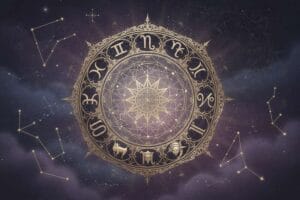
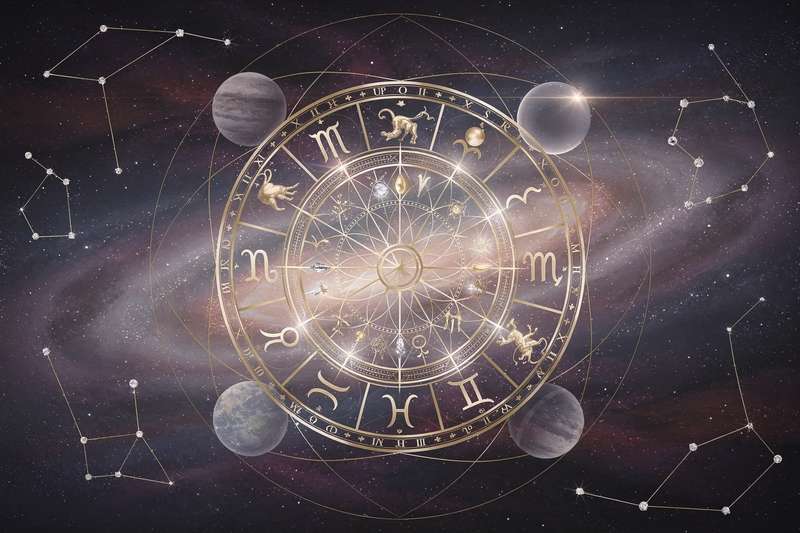
The zodiac is a band of sky divided into twelve equal segments of 30 degrees each. As the Earth orbits the Sun across a year, the Sun appears to pass through each of these segments in sequence — and wherever it was at the moment you were born is your Sun sign, often called your star sign or horoscope sign.
The twelve zodiac signs are:
- Aries (March 21 – April 19) — Fire sign, ruled by Mars
- Taurus (April 20 – May 20) — Earth sign, ruled by Venus
- Gemini (May 21 – June 20) — Air sign, ruled by Mercury
- Cancer (June 21 – July 22) — Water sign, ruled by the Moon
- Leo (July 23 – August 22) — Fire sign, ruled by the Sun
- Virgo (August 23 – September 22) — Earth sign, ruled by Mercury
- Libra (September 23 – October 22) — Air sign, ruled by Venus
- Scorpio (October 23 – November 21) — Water sign, ruled by Pluto (and Mars)
- Sagittarius (November 22 – December 21) — Fire sign, ruled by Jupiter
- Capricorn (December 22 – January 19) — Earth sign, ruled by Saturn
- Aquarius (January 20 – February 18) — Air sign, ruled by Uranus (and Saturn)
- Pisces (February 19 – March 20) — Water sign, ruled by Neptune (and Jupiter)
Each sign carries a distinct set of qualities, strengths, and tendencies — shaped by its element (Fire, Earth, Air, or Water) and its modality (Cardinal, Fixed, or Mutable). These combinations give every sign its unique personality signature.
What Is a Horoscope, Really? How Astrology Readings Work
The word horoscope comes from the Greek horoskopos, meaning “observer of the hour.” In its truest form, a horoscope is a snapshot of the sky at a specific moment in time — most commonly, the moment you were born. That snapshot is your natal chart, also called a birth chart.
When people say “I read my horoscope,” they usually mean a sun-sign forecast — a general reading based solely on the sign the Sun occupied during your birth month. These are useful entry points, but they represent just one layer of a much richer picture.
What Does a Full Birth Chart Include?
A complete natal chart maps the positions of the Sun, Moon, and eight planets at the exact time and place you were born. Each planet governs a different area of your psyche and life experience:
- The Sun — your core identity and conscious self
- The Moon — your emotional world, instincts, and inner needs
- Mercury — how you think, communicate, and process information
- Venus — what you love, value, and find beautiful
- Mars — your drive, ambition, and how you take action
- Jupiter — where you find growth, abundance, and expansion
- Saturn — where you build discipline and face your greatest lessons
- Uranus — where you break conventions and seek freedom
- Neptune — your spiritual sensitivity, idealism, and imagination
- Pluto — deep transformation, power, and what you’re here to regenerate
Each planet lands in one of the twelve zodiac signs and one of the twelve houses, creating a unique combination that describes you in remarkable detail.
Sun, Moon, and Rising Signs: What’s the Difference?
If you’ve spent any time in astrology circles, you’ve heard people share their “big three” — Sun, Moon, and Rising. These three placements form the foundation of your astrological profile, and understanding each one helps explain why two people born under the same sun sign can feel so completely different.
Your Sun Sign
Your Sun sign is determined by the time of year you were born. It reflects your core identity — the qualities you’re here to embody and express. Think of it as the essence of who you are when you’re most fully yourself.
Your Moon Sign
Your Moon sign is determined by where the Moon was at your exact birth time. Because the Moon moves through each zodiac sign roughly every two and a half days, even siblings born close together can have different Moon signs. Your Moon sign describes your emotional landscape — what you need to feel secure, how you process feelings, and what your inner world looks like.
Your Rising Sign (Ascendant)
Your Rising sign — also called the Ascendant — is the zodiac sign that was just rising above the eastern horizon at the moment of your birth. It changes approximately every two hours, which is why your exact birth time matters for an accurate chart. Your Rising sign shapes your outward personality, your physical appearance, and the first impression you make on others. It’s the face you show the world before people know you deeply.
A quick way to remember the difference: your Sun sign is who you are, your Moon sign is how you feel, and your Rising sign is how you appear.
Common Questions About Horoscope Signs and Astrology
Is astrology a religion or a science?
Astrology is neither a religion nor a modern empirical science — it’s a symbolic system that has been refined over thousands of years. Its roots stretch back to ancient Mesopotamia, Egypt, and Greece, where sky observation was inseparable from understanding human cycles and seasons. Today, many people use astrology as a self-reflective tool: a language for understanding personality, timing, and life patterns. You don’t need to believe it’s literally predictive to find genuine value in it.
Can astrology tell the future?
Astrology works best when you think of it as a map of potential, not a fixed script. Planetary transits — the ongoing movement of planets through the sky — can indicate themes and energies that are active in your life at a given time. But how those themes play out depends on countless personal factors. Astrology is a tool for awareness and reflection, not a guarantee of specific events.
Why don’t I relate to my zodiac sign?
This is one of the most common questions beginners ask — and the answer almost always comes back to the fuller birth chart. If your Moon sign, Rising sign, or several other planets are in signs very different from your Sun sign, those placements will color your personality significantly. Someone with a Capricorn Sun but a Sagittarius Moon and Gemini Rising might feel far more adventurous and changeable than a “typical” Capricorn description suggests. Your Sun sign is just one chapter of your story.
What are the four elements in astrology?
The twelve zodiac signs are grouped into four classical elements, each describing a fundamental mode of experiencing life:
- Fire signs (Aries, Leo, Sagittarius) — enthusiastic, action-oriented, visionary
- Earth signs (Taurus, Virgo, Capricorn) — practical, grounded, sensory
- Air signs (Gemini, Libra, Aquarius) — intellectual, communicative, social
- Water signs (Cancer, Scorpio, Pisces) — intuitive, emotional, deeply feeling
What are the three modalities?
Beyond elements, each sign belongs to one of three modalities that describe how it operates:
- Cardinal signs (Aries, Cancer, Libra, Capricorn) — initiators who start new things
- Fixed signs (Taurus, Leo, Scorpio, Aquarius) — sustainers who build and commit
- Mutable signs (Gemini, Virgo, Sagittarius, Pisces) — adapters who transition and transform
How to Use Astrology in Your Daily Life
You don’t need a deep knowledge of astrology to start applying it meaningfully. Here are some practical, grounded ways to engage with your horoscope signs:
- Pull your birth chart. You need your birth date, birth time, and birth location. Free chart calculators are widely available online. Reading your chart — even just identifying your Sun, Moon, and Rising — is genuinely illuminating.
- Follow the Moon. The lunar cycle completes roughly every 29.5 days, moving through all twelve signs. Noticing how your mood and energy shift with the Moon’s sign is a simple, accessible way to start feeling astrology in your body rather than just reading about it.
- Notice planetary themes. When a major planet moves through a sign over weeks or months, the qualities of that sign show up collectively and personally. You don’t need to track every transit — simply staying curious about what’s active helps.
- Use astrology for reflection, not prediction. Journal prompts based on your natal placements can reveal patterns in how you relate, work, and respond. This is where astrology becomes genuinely useful: not as prophecy, but as a mirror.
- Study compatibility with curiosity, not judgment. Astrological compatibility looks at how two charts interact — Sun signs, yes, but also Moon signs, Venus signs, and the angles between planets. No pairing is inherently doomed, and no pairing is automatically guaranteed to succeed.
Common Misconceptions About Horoscope Signs
- “Your sun sign determines everything about you.” — Your Sun sign is one of dozens of placements in your chart. It’s important, but it’s not the whole picture.
- “Astrology says my fate is fixed.” — Astrology describes tendencies and themes, not predetermined outcomes. You always have agency.
- “Incompatible signs can’t have good relationships.” — Any two signs can build something meaningful. Compatibility in astrology is about awareness and effort, not automatic harmony or conflict.
- “You have to believe in astrology for it to be useful.” — Many people use astrology as a psychological and reflective framework rather than a literal belief system, and find deep value in it that way.
- “Horoscopes are only about love and romance.” — Astrology covers every area of life: career, health, creativity, finances, family, spirituality, and more. Each of the twelve houses in your chart governs a specific life domain.
- “All Scorpios are intense, all Geminis are unreliable…” — Sign stereotypes are shortcuts, not truths. Every person is a complete chart, and generalizations based on Sun sign alone rarely capture a full human being.
Final Thoughts
Astrology, at its heart, is a language — one that has evolved across millennia to help human beings understand themselves, their relationships, and their place in the larger cycles of time. Your horoscope signs are not a cage or a verdict. They’re an invitation to know yourself more deeply.
Whether you’re here because you finally want to understand what your Moon sign means, or because you’ve been curious about birth charts for years and never knew where to start, the best next step is simply this: pull your chart, sit with it, and notice what resonates. The most meaningful astrology is always the kind that feels true to your own lived experience.
The sky has been mapped and studied for thousands of years. What it says about you is worth exploring.
Frequently Asked Questions About Horoscope Signs
What is the difference between a sun sign and a star sign?
There is no difference — “sun sign” and “star sign” refer to the same thing: the zodiac sign the Sun occupied at the time of your birth. “Star sign” is simply a more colloquial, commonly used term, while “sun sign” is the technically accurate astrological name for the same placement.
How do I find my Moon sign and Rising sign?
Your Moon sign and Rising sign require your exact birth date, birth time, and birth location to calculate accurately. Once you have those three pieces of information, you can enter them into any reputable free birth chart calculator to instantly see your full natal chart, including your Moon and Rising placements.
Are horoscopes accurate?
Sun-sign horoscopes are broad generalizations written for one-twelfth of the population at a time, so they vary widely in how personally relevant they feel. A reading based on your full natal chart — including your Moon, Rising, and planetary placements — is far more specific and tends to resonate much more strongly. Accuracy depends heavily on the depth of the reading and the skill of the astrologer.
What is the rarest zodiac sign?
Birth rates vary by time of year for social and seasonal reasons, making some signs statistically slightly less common than others. Ophiuchus is sometimes mentioned in popular media as a “13th sign,” but it is not part of the traditional Western tropical zodiac system used in standard horoscopes. Within the twelve-sign system, no sign is dramatically rarer than another on a global scale.