Horoscope astrology predictions have been a source of guidance, self-reflection, and cosmic curiosity for thousands of years. Whether you check your daily zodiac forecast each morning or commit to a deep birth chart reading each season, you are tapping into a symbolic language that maps celestial movement and reflects it back as meaningful insight. These predictions are not rigid prophecies — they are interpretations of pattern, rhythm, and timing that you can actively engage with and learn from.
What draws so many people to astrology predictions is not superstition. It is the experience of reading a forecast and feeling genuinely seen. When the moon moves into expressive Leo energy and you suddenly feel like calling a friend, speaking your mind, or wearing something bold — that is attunement. This guide breaks down what horoscope predictions actually are, how they are crafted, and how you can use them with real confidence in your everyday life.
What Are Horoscope Astrology Predictions?
Horoscope astrology predictions are carefully considered interpretations of planetary positions as they relate to the twelve zodiac signs and to your personal birth chart. The word “horoscope” itself has Greek roots — “horoskopos” translates roughly as “hour watcher” — a name that points directly to how precise and time-sensitive the art of astrological forecasting truly is.
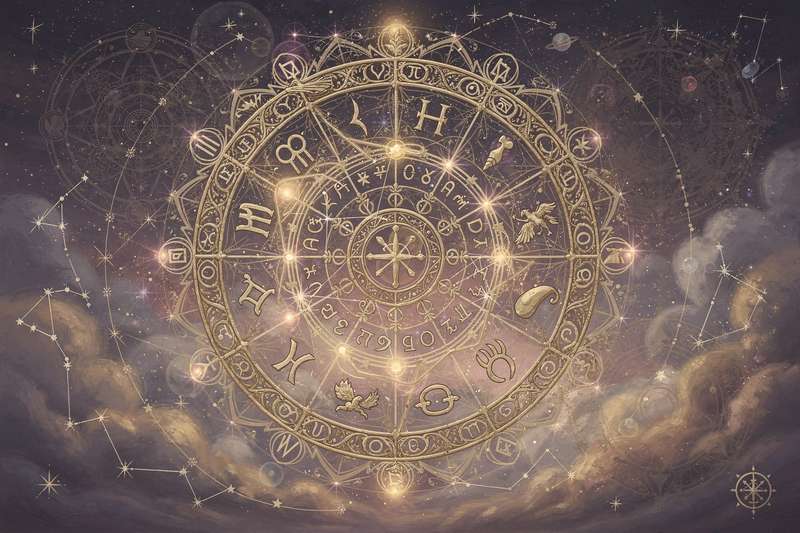
Western astrology, the tradition most English-language horoscopes draw from, divides the ecliptic into twelve equal signs, each carrying a distinctive set of archetypal qualities. Aries opens the wheel with fire and initiative; Taurus brings earth and steadiness; Gemini adds air and curiosity; Cancer offers water and emotional depth; Leo burns with radiance and self-expression; Virgo refines with precision and care; Libra seeks balance and beauty; Scorpio dives into emotional truth; Sagittarius reaches outward for meaning; Capricorn builds with discipline; Aquarius thinks beyond convention; and Pisces dissolves the self back into the whole.
Planets move through these signs and form geometric angles — called aspects — with the planets in your personal chart. Those interactions are what astrologers interpret to create a forecast. The type of prediction you read depends on which time frame and planetary layers are being considered:
- Daily horoscope predictions focus primarily on the moon, which changes signs approximately every two and a half days, setting the emotional tone of each stretch.
- Weekly astrology forecasts incorporate the sun and faster-moving planets like Mercury and Venus, revealing broader themes around communication, relationships, and personal direction.
- Monthly horoscope predictions track the lunation cycle — the interplay between new moons and full moons — which mark natural moments for intention-setting and release.
- Annual horoscopes draw on slower planets like Jupiter and Saturn, whose year-long or multi-year transits shape the bigger chapters of your life story.
How Astrology Predictions Are Actually Made
Creating a meaningful forecast requires layering several streams of information. Here is how the process actually works — and why two people born under the same sun sign can experience a prediction so differently.
Your Natal Chart: The Personal Blueprint
Your birth chart — sometimes called a natal chart — is calculated using the precise date, time, and location of your birth. It shows the position of the sun, moon, and every planet across all twelve zodiac signs and twelve houses at the exact moment you entered the world. This chart is uniquely yours, and it is the foundation against which all transits and predictions become personally relevant.
When an astrologer writes a general sun sign forecast, they are interpreting a planetary pattern in relation to where the sun sits in that sign’s chart structure. When they read your natal chart specifically, they can tell you exactly which house a transiting planet is activating — and what that means for the particular areas of life those houses govern. That specificity is the difference between a weather report and a personal conversation.
Planetary Transits: The Sky in Constant Motion
Transits are the real-time positions of the planets as they journey through the zodiac. Each planet moves at a vastly different pace: the moon races through all twelve signs in about a month; the sun takes a full year; Jupiter spends roughly twelve months in each sign; and Pluto’s passage through a single sign can span well over a decade.
When a transiting planet makes a significant aspect to a planet in your natal chart — say, Jupiter crossing over your natal Venus — astrologers interpret that as a period of heightened activity in whatever areas of life those planets govern. Right now, with Mercury settled into Libra and Venus moving through the deep, searching quality of Scorpio, communication naturally carries more emotional weight and a stronger drive toward honesty in close relationships. These are real tonal shifts in the atmosphere that most people can sense, even if they cannot yet name them.
Aspects: The Grammar of Planetary Relationship
The geometric angles between planets — aspects — describe the quality of the energetic relationship between two planetary forces. A trine (120 degrees) creates ease and natural flow. A square (90 degrees) produces friction that, while sometimes uncomfortable, often sparks the most meaningful growth. An opposition (180 degrees) highlights where balance is needed between two competing pulls. A conjunction (0 degrees) merges and amplifies whatever both planets represent.
Learning to recognize these patterns transforms how you read any horoscope. It shifts the question from “what is going to happen to me?” to “what kind of energy am I working with, and what is the wisest way to engage it?”
How Horoscope Forecasts Show Up in Everyday Life
Once you start reading your horoscope alongside your lived experience, patterns emerge that you cannot easily un-see. The sky and your inner world begin to correspond in ways that feel genuinely illuminating.
The Moon’s Immediate Pull
Of all the planetary bodies, the moon is the most immediately felt. It governs emotion, instinct, and the rhythm of your inner world. As it moves through each sign every two and a half days, you may notice real shifts in mood, energy, and appetite — even before you have checked what sign the moon is in.
With the moon in Leo, for example, there is a natural pull toward self-expression, warmth, and wanting to be seen and celebrated. You may feel inclined to speak boldly, dress with intention, or reach out generously to someone you care about. Then as a Virgo new moon approaches, that same energy settles into something quieter and more precise — a desire to organize, improve your routines, and attend carefully to the practical details of your life.
Sun Sign Predictions vs. Full Natal Chart Readings
Most popular horoscope predictions are written for your sun sign — determined by the position of the sun at the time of your birth. Aries covers roughly March 21 to April 19; Taurus from April 20 to May 20; Gemini from May 21 to June 20 — and so on through the standard tropical zodiac. Sun sign horoscopes are meaningful because the sun represents your core identity and the essential themes you are most here to develop and express.
But your rising sign — determined by your exact birth time — is equally significant. It shapes how you move through the world and how others first encounter you, and it determines which house of your chart each sign rules. Many experienced astrology readers check both their sun sign and rising sign forecasts and find the rising sign reading to be even more accurate for day-to-day events. If you have never looked up your rising sign, it is genuinely worth discovering.
Recognizing Longer Planetary Cycles
Bigger shifts in life often coincide with the slower movements of Jupiter, Saturn, and the outer planets. Jupiter’s presence in a particular area of your chart tends to expand whatever that house governs — bringing growth, opportunity, and sometimes a generous overflow that asks for discernment. Saturn’s transits ask for commitment, structure, and patient effort in return for something built to last.
These cycles are not punishments or rewards. They are rhythms — like seasons — that, once understood, help you make more intentional choices about where to direct your energy and how to work with your timing wisely.
How to Use Your Horoscope Predictions Wisely
Reading a forecast is one thing. Bringing that insight into your actual life is another. These practical approaches can help you get genuine value from astrology predictions over time.
Read Both Your Sun and Rising Signs
If you only know your sun sign, start there — it offers real thematic value. But once you discover your rising sign, read both forecasts and notice which feels more immediate and specific to what is actually unfolding in your life. Over time, you will develop a feel for which lens speaks most directly to your day-to-day experience.
Keep an Astrology Journal
A simple practice of noting the day’s major planetary position and how your experience actually unfolded takes five minutes and builds into something surprisingly useful. After a few weeks, you begin to recognize your own personal rhythms — how a Scorpio moon deepens your conversations, how a Sagittarius moon makes you restless and drawn to big ideas, how a Capricorn moon sharpens your focus on long-term goals. This practice turns astrology from a passive read into an active tool for self-knowledge.
Work With the Lunar Cycle
New moons are openings — an ideal time for setting intentions in whatever area of life the moon’s sign governs. A Virgo new moon invites focus on health habits, daily routines, and practical skill-building. Full moons are moments of illumination, completion, or conscious release. Following these two poles each month gives your astrology practice a natural, repeating structure that deepens with every cycle.
Some people pair their moon phase practice with supportive companions. Labradorite is a stone often used to sharpen intuitive perception and is a natural ally for reflective astrological work. Amethyst brings calm and spiritual clarity, making it a welcome presence during chart readings or quiet meditation. Many readers also draw a tarot card alongside their daily horoscope — the Wheel of Fortune card, with its message of cycles, turning points, and the constancy of change, speaks directly to the same truths that planetary movement illustrates so well.
Approach It With Curiosity, Not Anxiety
The healthiest relationship with horoscope predictions is one of curious engagement rather than fearful dependence. If a forecast points to tension or a challenging configuration ahead, receive that as useful context — not a verdict. Taking a moment to center yourself before a reading, drawing awareness gently into your third-eye chakra as the seat of inner perception and intuitive knowing, can help you receive astrological insight from a place of clarity rather than worry. Astrology works best when it expands your self-awareness. It is a tool, not a fate.
Common Misconceptions About Horoscope Astrology Predictions
- “Sun sign horoscopes are the same for everyone born in that sign.” They reflect broad thematic patterns, but your full natal chart — with its unique rising sign, moon placement, and house structure — makes your astrological picture entirely personal. Two Scorpios with different rising signs will experience the same transit in markedly different ways.
- “A challenging forecast means a difficult day is inevitable.” Astrology describes energies and tendencies, not fixed events. How you respond to any planetary configuration is always yours to determine. Awareness of the energy is itself a form of preparation.
- “You need to believe in astrology for it to be useful.” Many people engage with horoscopes purely as reflective prompts — a way to pause and check in with themselves. The practical value does not require metaphysical belief, only honest curiosity.
- “Western and Vedic astrology say the same things.” They are distinct systems with different philosophical roots. Vedic astrology is moon-sign based and uses the sidereal zodiac; Western astrology is typically sun-sign centered and uses the tropical zodiac. Both traditions are profound and valid — but they calculate planetary positions differently and often yield different readings for the same person.
- “Only your sun, moon, and rising sign matter.” These three are essential starting points, but Mercury colors how you think and communicate; Venus shapes your values and what you attract; Mars fuels your drive and courage. The full birth chart is always richer than any single placement can reveal on its own.
- “Astrology is primarily about predicting the future.” The most enduring value of horoscope predictions is not what they say about what will happen — it is what they illuminate about where you are right now, which patterns are active in your life, and what choices are genuinely available to you in this moment.
Final Thoughts
Horoscope astrology predictions, at their best, are not about fate. They are about awareness. The planets do not write your story for you — but understanding their movements can clarify why certain periods feel charged with possibility while others invite patience, rest, or focused effort. The more you engage with your birth chart and the rhythms of the sky overhead, the more fluent you become in a language that has helped human beings make meaning of their inner and outer lives for thousands of years. Bring an open mind, a journal, and your natal chart — and see what begins to emerge for you.
Frequently Asked Questions About Horoscope Astrology Predictions
How accurate are horoscope astrology predictions?
Accuracy depends heavily on specificity. General sun sign forecasts apply broadly to millions of people at once, while readings based on your full natal chart — including your rising sign, moon placement, and house positions — tend to resonate far more personally. The most reliable way to calibrate accuracy is to track your own experience against astrological forecasts over several weeks and notice where the patterns hold.
What is the difference between a daily horoscope and a birth chart reading?
A daily horoscope is a general forecast written for your sun sign or rising sign based on current planetary positions — it changes every day and is written for a large audience. A birth chart reading is a personalized analysis of the sky at the precise moment and location of your birth, forming a fixed individual blueprint that makes all in-depth astrological interpretation possible.
Do I need my birth time to get accurate astrology predictions?
Your birth time is not needed for general sun sign or moon sign forecasts. However, it becomes essential for determining your rising sign and the placement of the twelve houses in your natal chart — both of which significantly deepen the accuracy and personal relevance of any astrological reading you receive.
Which planets matter most in a horoscope prediction?
The sun, moon, and rising sign form the foundational “big three” that most forecasts reference first. Mercury, Venus, and Mars add nuance around how you think, love, and act. The outer planets — Jupiter, Saturn, Uranus, Neptune, and Pluto — describe longer-term cycles and generational themes that shape major chapters of your life over months or even years.