Tarot Tips for Beginners at a Glance
Tarot tips for beginners all share one golden thread: the most effective way to learn tarot is through experience, not memorization. Whether you’re holding your first deck or you’ve been shuffling cards for a few months and still feel uncertain, these essential beginner tarot practices will build real confidence — the kind that comes from genuine connection with the cards, not from reciting definitions you found in a book.
- Start with 1–3 card spreads — skip the Celtic Cross for now
- Draw one card every morning and reflect on it at night
- Read the image first — your instincts know more than you think
- Trust your intuition over rote textbook interpretations
- Keep a tarot journal to grow your personal card vocabulary
- Make it personal — connect every card to real moments in your life
The Beginner’s Path: Starting Your Tarot Practice the Right Way
The most common mistake new tarot readers make is trying to memorize all 78 card meanings before ever doing a real reading. It’s understandable — tarot looks like a system you need to master before you can use it. That approach usually produces anxiety rather than insight.
Instead, start here: pick up your deck, pull a single card, and look at the image. What do you see? What feeling does it stir? What story is the figure in the card living through? That instinctive first read is often the most accurate one you’ll give.
Keep It Beautifully Simple
A 1-card or 3-card spread contains as much wisdom as any 10-card layout. When you’re starting out, the Celtic Cross can feel like trying to read a novel in a language you’ve barely begun to learn. A single card, drawn with a clear question in mind, is more than enough to work with.
Strong questions for a 1-card daily pull:
- What energy is most important for me to carry today?
- What might I be overlooking right now?
- What lesson is quietly presenting itself this week?
Draw a Tarot Card Every Day
Nothing builds tarot fluency faster than a daily card practice. Each morning, shuffle with intention, draw one card, and sit with it for a few quiet minutes. By evening, revisit it — how did its energy show up? Did The Fool‘s spontaneity manifest as an unexpected opportunity? Did the Ten of Wands appear as genuine, bone-deep exhaustion?
Over weeks and months, you build what no book can give you: a living library of personal tarot experience. Each card stops being a definition and becomes a memory.
Build a Personal Connection with the Cards
Tarot becomes powerful when you stop treating cards as definitions to recall and start treating them as characters you actually know. Which card best describes your most ambitious friend? Which one captures the feeling of a Sunday morning with nowhere to be? Which card showed up the week everything changed?
These personal associations are the roots of genuine reading. They make the cards yours — and yours alone.
When Learning Tarot Feels Overwhelming: Pitfalls Every Beginner Faces
Even the most enthusiastic beginners hit a wall. If you’ve been studying for weeks and still feel lost, you’re likely falling into one of these patterns — and each one has a straightforward fix.
Over-Relying on Book Meanings
Books are solid starting points, but if every reading has you reaching for a reference guide, you’re interrupting the intuitive flow that makes tarot genuinely useful. At some point, the book has to go down. The meaning you sense in your body — the subtle pull toward a particular interpretation — is often more relevant to your actual question than the textbook version.
Ignoring the Images
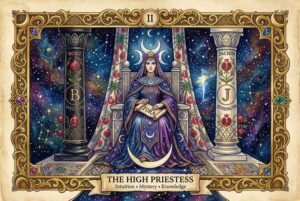
The Rider-Waite-Smith deck — created by Pamela Colman Smith and A.E. Waite in 1909 — placed rich symbolic imagery on every single card, including the Minor Arcana, precisely because images communicate what words cannot. If you’re staring at The High Priestess and feeling something you can’t quite name, that feeling is the message. Follow it before you reach for an explanation.
Expecting Mastery on a Timeline
Tarot is a lifelong practice. Experienced readers with decades behind them still encounter cards in entirely new ways. Release the expectation that you should “know” tarot by a certain point — and stay curious instead. The beginner’s mind is not a weakness. It’s one of the greatest assets a reader can have.
Tarot for Love and Relationships: Beginner Readings That Go Deep
Love questions are the most common ones brought to a tarot reading — and for good reason. The heart holds so much that resists ordinary language, and the cards offer a vocabulary for feelings that haven’t found words yet.
As a beginner, resist the pull toward binary questions like “Will this work out?” and reach instead for open invitations: “What do I need to understand about how I show up in this relationship?” or “What is this connection asking me to grow into?”
Cards like The Lovers, Ace of Cups, and Two of Cups naturally surface in love readings. Don’t be unsettled if The Tower or The Hermit appears — these are not bad omens. They’re honest mirrors, and honest mirrors are exactly what love requires.
Tarot for Career and Finance: Practical Beginner Spreads
Career and financial questions are particularly well-suited to tarot because they involve concrete choices where clarity has real consequences. A simple three-card spread — “Where I am / What’s blocking me / What to focus on next” — can bring surprising insight to a professional crossroads or a money decision you’ve been avoiding.
The suit of Pentacles governs material matters: work, money, stability, and practical skill. When Pentacles cards dominate a career reading, the cards are speaking directly to your earthly circumstances. The Eight of Pentacles, for instance, almost always signals the importance of dedicated, patient practice — a message that lands with particular weight for anyone at the beginning of learning something new.
Tarot illuminates. The action is always yours to take.
Tarot as a Spiritual Practice: What Beginners Often Discover
At its most fundamental, tarot is a tool for self-knowledge. Each card is an archetype — a universal pattern of human experience — and when you draw one, you’re essentially asking: which part of the human story is mine right now?
Many beginners find that consistent tarot practice naturally deepens their connection to intuition and inner wisdom. The third-eye chakra — your centre of inner vision and symbolic perception — is often quietly activated during tarot work, especially when you choose to read by feel rather than by formula.
Crystals like amethyst and labradorite are long-standing companions for tarot practice. Amethyst sharpens intuitive clarity and calms mental noise, while labradorite is traditionally associated with accessing deeper perception — both qualities that strengthen over time in any dedicated reader.
Consider building a small ritual around your readings: light a candle, hold a crystal in your non-dominant hand, take three slow breaths before you shuffle. These small acts signal to your whole system — body, mind, and intuition — that something intentional is about to happen.
“Tarot doesn’t predict the future. It illuminates the present so honestly that the path forward becomes clear on its own.”
Tarot Tips for Beginners in a Real Reading: Putting It All Together
When you sit down for a reading — whether for yourself or someone you care about — here is a simple sequence that works well at every level of experience:
- Set a clear intention. Know which area of life you’re exploring before your hands touch the deck.
- Shuffle mindfully. Let your thoughts settle. There is no correct way to shuffle — do what feels natural and unhurried.
- Draw your card or cards. Start with one if you’re unsure. Expand to three as confidence grows.
- Look at the image first. Before reaching for a meaning, observe. What strikes you immediately — a colour, a figure, an expression?
- Feel before you define. Notice your emotional response. What does this card make you feel?
- Connect it to your question. How does what you observe relate directly to what you asked?
- Write it down. Even a few sentences in a journal will deepen the reading and create a record you’ll return to with gratitude.
Over time, your readings will grow richer, more nuanced, and more accurate — not because you memorized more, but because you trusted more.
Frequently Asked Questions About Tarot for Beginners
How long does it take to learn tarot?
There’s no fixed timeline — tarot is a living practice rather than a subject you complete. Most readers feel genuinely comfortable with the cards after six months to a year of consistent daily practice, though meaningful readings are absolutely possible from your very first week.
Do you need psychic ability to read tarot?
No. Tarot works through symbolic interpretation and intuition, both of which everyone possesses to some degree. You don’t need special gifts to read the cards well — curiosity, patience, and a willingness to trust your own perceptions are all that’s required.
What is the best tarot spread for beginners?
A single-card daily pull is the ideal starting point for most beginners. Once you’re comfortable with that, a 3-card spread covering situation, action, and outcome offers meaningful depth without becoming unmanageable.
How should I choose my first tarot deck?
Choose a deck whose imagery genuinely speaks to you — one you could study for an hour without needing a guide beside you. The Rider-Waite-Smith tradition is the most thoroughly documented and widely studied, making it an excellent foundation, but the right deck is ultimately the one that feels alive in your hands.