Choosing Your First Tarot Deck: A Beginner’s Overview
Choosing your first tarot deck is one of the most meaningful steps you can take as a new reader. The world of tarot decks for beginners is vast — hundreds of options exist across Amazon, Etsy, and crowdfunding platforms — and it is easy to feel overwhelmed before you have even shuffled a single card. The good news is that the right deck for you already exists, and this guide will help you find it with clarity and confidence.
Rather than chasing the prettiest artwork or the most popular recommendation online, the goal is to find a deck that genuinely supports your learning process and speaks to your intuition. That connection between you and your cards matters far more than any external opinion.
What to Look For When Choosing a Beginner Tarot Deck
Not all tarot decks are created equal when it comes to ease of learning. Here are the qualities that matter most for first-time readers:
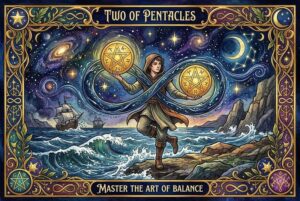
- Illustrated pip cards: A standard tarot deck contains 78 cards — 22 Major Arcana and 56 Minor Arcana. Many traditional decks (such as the classic Marseille style) use simple geometric patterns on the numbered Minor Arcana cards. For beginners, a deck where every single card features a full illustrated scene is far easier to read intuitively. You can look at the image and feel something before you even know the textbook meaning.
- Clear, readable symbolism: The imagery should communicate emotion and story at a glance. Overly abstract or heavily stylized artwork can make it harder to build your interpretive muscles in the early stages.
- A companion guidebook: Most decks come with a small white booklet (often called the LWB — Little White Book). Ideally, your first deck includes a clear, thoughtful guidebook or has a wealth of learning resources available for it online.
- Personal resonance: Hold the deck (in a shop if possible), or spend time looking through images online. Does something in you respond to the art? Does it feel welcoming rather than intimidating? That gut feeling is real data.
The Rider-Waite-Smith Deck: The Classic Starting Point
The Rider-Waite-Smith tarot deck is the most widely recommended deck for beginners, and for very good reason. Created collaboratively by artist Pamela Colman Smith and occultist Arthur Edward Waite, and first published in 1909 by the Rider Company, it was groundbreaking because every one of its 78 cards features a fully illustrated scene — including all 56 Minor Arcana cards, which had rarely been illustrated so richly before.
Because nearly every tarot learning resource, book, and online course references the Rider-Waite-Smith imagery, starting with this deck (or a close modern adaptation of it) gives you access to the largest body of educational material available. You will rarely find yourself stuck without a reference.
“The Rider-Waite-Smith deck is like learning to read with the most widely taught alphabet. Once you know it, every other deck becomes easier to understand.”
Many modern decks are designed in the Rider-Waite-Smith tradition — meaning they follow the same card structure and symbolism but feature updated or culturally diverse artwork. These are excellent alternatives if the original art style does not appeal to you visually.
Should You Wait for a Deck to Be Gifted to You?
A persistent myth in tarot circles says that your first deck must be given to you as a gift — that buying your own is somehow less legitimate or spiritually valid. This is simply folklore, and it has no basis in tarot tradition. There is absolutely nothing wrong with choosing and purchasing your own deck. In fact, many readers find that actively selecting their own cards strengthens the personal bond with the deck from the very beginning.
If someone does gift you a deck, that can be a beautiful experience. But please do not wait indefinitely for a gift if you are ready to begin. The cards are waiting for you right now.
Tarot Deck Options Beyond the Classic
Once you understand what to look for, the breadth of choice becomes exciting rather than overwhelming. Here are some categories worth knowing:
- Rider-Waite-Smith editions and reprints: The original deck is available in several print editions. Some feature the original color palette; others offer cleaned-up or modernized versions. All are excellent starting points.
- RWS-inspired modern decks: These follow the same 78-card structure and symbolic language as the Rider-Waite-Smith but feature fresh, diverse, or culturally specific artwork. They are ideal if you want something visually contemporary while still being fully supported by traditional learning resources.
- Oracle decks (not tarot): You will encounter many beautiful oracle decks alongside tarot decks. Oracle decks do not follow the 78-card tarot structure and are typically more free-form in their symbolism. They can be wonderful tools, but they are not interchangeable with tarot. Start with a true tarot deck first if tarot is your goal.
How Intuition Guides Your Choice
At the end of every practical checklist, intuition is still your most reliable guide. When you look at a deck and feel a quiet pull — a sense of recognition or warmth — that is worth paying attention to. Tarot is, at its core, a tool for deepening your intuitive awareness. It makes sense that your relationship with your deck would begin exactly the same way: by listening inward.
If you are shopping online and cannot physically handle the cards, look up full card scans of the deck you are considering. Spend time with the images. Notice which decks make you want to sit down and start reading immediately. That eagerness is a meaningful signal.
Crystals like amethyst and clear quartz are often used alongside tarot practice to heighten intuition and keep your reading space energetically clear — placing one on your new deck before your first reading is a lovely way to set an intention.
Spirituality and Your First Tarot Deck
Receiving your first tarot deck — whether you buy it yourself or receive it as a gift — is genuinely a spiritual threshold. Many readers describe the moment they first held their deck as one of unexpected recognition, as if some part of them already knew this was coming.
Before your first reading, consider cleansing your deck energetically. Common methods include leaving it in moonlight during a full moon, placing it on a piece of selenite overnight, or simply knocking on the deck three times with your knuckles to clear any residual energy. Then hold the cards, breathe, and set a quiet intention for your practice.
Your third-eye chakra — the energy center associated with intuition and inner vision — is naturally activated through regular tarot work. As you build a consistent practice with your first deck, do not be surprised if your intuitive perceptions in everyday life sharpen alongside your card reading skills.
Choosing Your First Tarot Deck: Bringing It All Together
The most important thing to remember is that there is no universally perfect first tarot deck — there is only the right deck for you, right now. Start with a deck that is fully illustrated, has ample learning resources available, and genuinely appeals to something in you when you look at it. The Rider-Waite-Smith tradition is the safest and most well-supported starting point, but any deck that meets those criteria and makes your heart curious is a worthy choice.
You do not need to wait until you feel ready. You do not need permission. You do not need someone to hand you the cards. You only need to begin — and your first deck is the door.
Frequently Asked Questions
Do I need to be gifted my first tarot deck, or can I buy it myself?
You can absolutely buy your own first tarot deck — this is a myth with no historical basis in tarot tradition. Many experienced readers choose their own decks throughout their lives, and doing so is considered a meaningful act of self-trust and intention.
What is the best tarot deck for absolute beginners?
The Rider-Waite-Smith deck (first published in 1909, with artwork by Pamela Colman Smith) is the most recommended starting point because every card is fully illustrated and virtually all tarot learning resources reference its imagery. Any modern deck built in the RWS tradition is also an excellent choice.
How many cards does a tarot deck have?
A standard tarot deck always contains 78 cards: 22 Major Arcana cards and 56 Minor Arcana cards divided across four suits. If a deck varies significantly from this count, it is likely an oracle deck rather than a traditional tarot deck.
How do I know if a tarot deck is right for me?
Look through images of the full deck before buying — many sellers and publishers share complete card scans online. If the artwork makes you feel curious, warm, or quietly excited, that is a strong sign of compatibility. Tarot is an intuitive practice, and your gut response to a deck’s imagery is genuinely meaningful data.