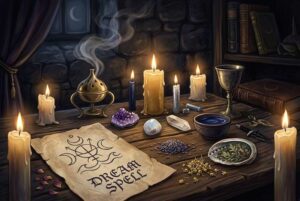
A hereditary witch is someone who inherits magical knowledge, spiritual practice, and ancestral wisdom directly through their family line. Unlike those who discover witchcraft through books or personal spiritual seeking, a hereditary witch grows up surrounded by the craft — absorbing it through family ritual, storytelling, and the quiet passing of secret knowledge from one generation to the next. In recent years, interest in hereditary witchcraft and ancestral magic has surged, as more people feel called to trace their roots, recover suppressed traditions, and reconnect with the deeper spiritual identity their family may have quietly carried for centuries. Whether you already know your lineage runs deep with magic or you simply feel an inexplicable pull toward the craft, this guide will help you understand what it means to be a hereditary witch — and how to step fully and confidently into that path.
What Is a Hereditary Witch?
At its core, a hereditary witch is someone born into a family tradition of magical or esoteric practice. This tradition may have been openly celebrated, quietly maintained, or — especially in cultures shaped by persecution — carefully hidden beneath the surface of ordinary life. The knowledge passed down can take many forms: herbal remedies, divination skills, protective charms, spirit work, or rituals tied to the seasons and the land.
It is worth being clear about one important misconception right away: being a hereditary witch does not automatically make you more powerful, more legitimate, or more spiritually advanced than someone who comes to witchcraft by personal calling. Magical ability grows through practice, intention, and commitment — not bloodline alone. Equally, not every child born into a witch family chooses to continue the tradition, and that choice deserves full respect. The hereditary path is one valid road into the craft, not the only one, and certainly not a superior one.
Common Types of Hereditary and Family-Based Witchcraft
Hereditary witchcraft is not a single unified tradition. Across the world, distinct cultural lineages have kept magical family practices alive in their own unique ways. Here are some of the most recognised forms:
- Stregoneria (Italian Witchcraft): One of the most documented hereditary traditions, Stregoneria is an Italian folk magic system passed through family lines. It blends pre-Christian animism, folk healing, and Catholic mysticism, often centred on the figure of the Strega — the female healer and magical practitioner.
- Romanian Folk Magic: Romanian families have long preserved a tradition of household protection magic, plant-based healing, and spirit communication. Much of this knowledge was transmitted entirely through oral tradition, shared between mothers and daughters over generations.
- Appalachian Granny Magic: Found in the mountain communities of the American South, this tradition blends European folk magic with Indigenous and African spiritual elements. Healers — often older women known as “granny witches” — passed remedies and protective practices down through tight-knit family networks.
- Celtic and British Folk Traditions: Many families with Celtic ancestry carry fragments of older magical practices — herbalism, weather reading, second sight, and communion with the land — even when those practices were never formally labelled as witchcraft.
- Curanderismo: A Mexican and Latin American healing tradition rooted in Indigenous, Spanish, and African influences. Curanderos and curanderas often inherit their gift and their knowledge from family elders, working with plants, prayer, and spiritual cleansing.
How to Know If You Come From a Magical Lineage: 7 Practical Steps
You may feel the pull of hereditary magic long before you have the evidence to confirm it. These steps will help you investigate your roots, understand your instincts, and begin building a practice grounded in your actual heritage.
1. Start With an Honest Family Conversation
The first and most direct step is to speak with family members who are still living. Ask your grandparents, aunts, uncles, or older cousins about family customs, remedies, or beliefs. You are not looking for dramatic confessions — you are listening for threads. Did a grandmother have an unusual knowledge of herbs? Did your family have specific rituals around certain seasons or events? Were there any objects — old books, bundles of dried plants, carved items — that were treated with particular reverence?
Many families kept magical practice hidden due to religious pressure or fear of social judgment. Framing your questions gently and with genuine curiosity — rather than as an accusation or test — tends to open doors that blunt questions would close.
2. Research Your Ancestral Cultures
Even if your direct family cannot tell you much, your ethnic and cultural heritage can point you toward the folk magic traditions your ancestors most likely practiced. Use genealogy resources to trace your family’s geographic origins, then research the spiritual practices native to those regions. You may find that what felt like personal quirks — an instinctive relationship with plants, a sensitivity to atmosphere in certain places, a talent for reading people — has deep cultural roots.
3. Look for a Family Grimoire or Book of Shadows
Some hereditary witch families keep written records: old notebooks, recipe books, prayer journals, or formal grimoires filled with spells, charms, and remedies. These may be stored with old family papers, tucked into antique furniture, or held by an older relative who may not even recognise their magical significance. If you locate such a document, treat it with care. Photograph or transcribe its contents before the original deteriorates further, and begin working to understand the context of what was recorded.
4. Pay Attention to Recurring Gifts in Your Family
Hereditary magical traditions often cluster around specific abilities that appear repeatedly across generations. Does your family have a notably strong healer or herbalist in every generation? Does second sight, vivid prophetic dreaming, or an unusual sensitivity to the emotions of others run through your line? These patterns are worth noting. They do not confirm a formal witchcraft lineage, but they are meaningful data points when you are building a picture of your family’s relationship with the unseen world.
5. Connect With Your Ancestors Directly
You do not need documented proof to begin working with your ancestors. Setting up a simple ancestor altar — a candle, a glass of water, photographs or mementos of those who have passed — creates a space of invitation and respect. Sit quietly at this altar, speak to your ancestors, and ask for their guidance. Many practitioners report that ancestral contact becomes clearer and more meaningful once they actively acknowledge the connection. This practice is foundational to many hereditary traditions and does not require any special lineage to begin.
6. Study the Folk Magic of Your Heritage
Once you have identified the cultural traditions most relevant to your background, begin studying them in depth. Look for books by authors from within those traditions, seek out community groups, and approach the material with humility and respect. If your heritage includes a living tradition — such as Curanderismo or a specific Indigenous practice — be mindful of the difference between personal exploration and cultural appropriation. Where a tradition belongs to a community, engage with that community respectfully rather than practising in isolation.
7. Begin Documenting Your Own Practice
Whether your hereditary roots are confirmed, suspected, or still unknown, start keeping your own magical record now. A personal grimoire or journal is one of the most powerful tools any witch can build. Record what you learn, what you try, what works for you, and what you feel during ritual and practice. You are not just building a practice — you are creating the foundation of a tradition that those who come after you might one day inherit.
Essential Tools and Supplies for the Hereditary Witch
Your tools do not need to be expensive or elaborate, especially at the beginning. The most important items are those that carry meaning for you and your lineage.
- Candles: White for clarity and ancestral connection, black for protection, and any colours tied to your specific cultural tradition.
- Herbs: Begin with versatile, widely available herbs like rosemary (protection and memory), lavender (calm and psychic opening), and mugwort (dreaming and ancestral contact). Over time, incorporate plants specific to your heritage.
- Crystals: Ancestite, black tourmaline for protection, amethyst for psychic awareness, and clear quartz as a general amplifier are solid starting points.
- An Ancestor Altar: A dedicated surface with photos, a candle, a glass of water, and any inherited objects creates a focal point for ancestral work.
- A Journal or Grimoire: Your most essential tool. Record everything — observations, dreams, experiments, results.
- Divination Tools: Tarot cards, runes, or pendulums can help you access intuitive guidance and build your relationship with subtle perception.
Ethics and Best Practices
Witchcraft — hereditary or otherwise — carries ethical responsibilities that should be front of mind from the very beginning of your practice.
Respect for consent is fundamental. Magic directed at other people without their knowledge or agreement raises serious ethical questions, regardless of your intent. Most experienced practitioners advise focusing your magical work on yourself, your own environment, and your direct wellbeing before attempting to influence others.
Cultural respect is equally essential. If your hereditary path leads you toward a specific cultural tradition, honour the boundaries and protocols of that tradition. Do not cherry-pick symbols or practices from cultures outside your own heritage as aesthetic choices.
And hold your claimed identity lightly. Being a hereditary witch is not a status to perform — it is a living relationship with your lineage and your practice. The craft values humility, honesty, and genuine engagement over labels and hierarchy.
Common Beginner Mistakes to Avoid
- Overstating your lineage: Claiming a “long line of witches” before you have genuinely researched it can create a shaky foundation. Let your practice speak for itself while you investigate your roots honestly.
- Skipping the foundational work: It is tempting to jump straight into complex rituals. Spend real time on basics — grounding, shielding, meditation, and building your relationship with the elements — before advancing.
- Treating hereditary status as a shortcut: Innate sensitivity is a gift, not a replacement for study and practice. Skill in any tradition requires consistent, dedicated effort over time.
- Isolating yourself from community: Whether online or in person, connecting with other practitioners helps you learn faster, stay grounded, and avoid the echo chamber of purely self-directed practice.
- Dismissing family members who don’t practice: Not everyone born into a witch family will choose the path. This is not a failure or a loss — it is simply their right. Do not pressure, judge, or distance yourself from family members over it.
- Neglecting your mental and physical health: Spiritual practice supplements a grounded life — it does not replace therapy, medical care, or healthy daily habits. Keep both dimensions of your wellbeing in view.
How to Build Your Practice Over Time
Real magical development is slow, layered, and deeply personal. Give yourself permission to grow at your own pace. Begin with one or two practices — perhaps daily journaling and a weekly ancestor candle — and let those roots deepen before adding more. Revisit your family research periodically; memories surface, relatives open up, and old documents appear when the time is right. As your practice matures, you will likely find it naturally aligning with the specific gifts and traditions your line carried, even before you had the conscious knowledge to name them. Trust that process. The ancestors who walked before you are, in their own way, already guiding you home.
Final Thoughts
Being a hereditary witch is not about having the right bloodline certificates or the most dramatic origin story. It is about honouring the knowledge that was carried for you, often at great cost, by those who came before. It is about picking up the thread — through research, practice, ritual, and honest self-inquiry — and deciding to carry it forward. Wherever you are on this path right now, that act of conscious continuation is itself the most powerful magic of all.
Frequently Asked Questions
Do you have to be born into a witch family to be a hereditary witch?
By definition, a hereditary witch is someone who inherits magical practice through their family line. However, many people discover this lineage later in life, after the tradition was hidden or lost. If you come to witchcraft through personal calling rather than family teaching, you are still a valid practitioner — just following a different, equally meaningful path.
Can hereditary witchcraft skip a generation?
Yes, this is widely reported in family traditions. If a generation chose not to practice — due to religious conversion, social pressure, or personal choice — the knowledge may have lain dormant before resurfacing in a later descendant. Some practitioners describe feeling a strong pull toward the craft that makes more sense once they uncover suppressed family history.
Are hereditary witches more powerful than other witches?
Not inherently. Magical skill and spiritual depth come from practice, intention, study, and personal development — not from ancestry alone. A hereditary witch may have an early familiarity with certain practices, but that does not translate into greater power than a self-taught or initiated witch who has dedicated years to their craft.
What if my family has no history of witchcraft but I feel drawn to it?
That pull is meaningful and worth following. Many practitioners who feel a strong, unexplained draw to witchcraft later discover that their family’s magical history was hidden or suppressed. Even if no formal tradition surfaces, your personal calling is a legitimate starting point — one that many of the most skilled practitioners have built entire lifetimes of practice upon.