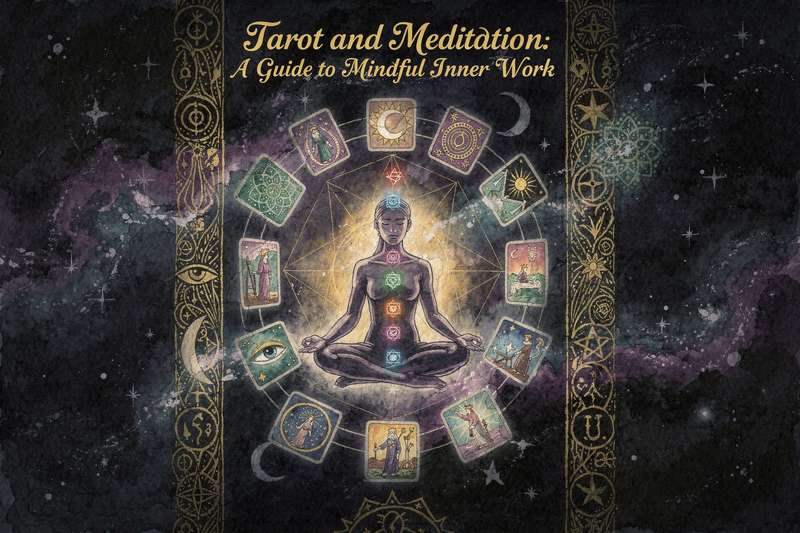
Tarot and meditation create a powerful bridge between conscious awareness and intuitive wisdom. When you combine mindful presence with symbolic card imagery, readings transform from simple fortune-telling into genuine tools for self-discovery and emotional clarity.
This practice isn’t about predicting the future—it’s about deepening your relationship with the present moment while accessing the wisdom your intuition already holds.
Tarot and Meditation Practice at a Glance
Using tarot cards as meditation tools offers something traditional meditation objects don’t: personal relevance and layered meaning. Each card becomes both an anchor for attention and a doorway into deeper self-awareness.
The rich imagery naturally draws your focus away from mental chatter. Colors, symbols, figures, and landscapes provide multiple entry points for contemplation. Unlike following breath alone, tarot meditation engages both your visual awareness and your intuitive sensing simultaneously.
Key benefits of this combined practice:
- Tangible focal points that hold your attention more easily than abstract concepts
- Visual details that anchor you when thoughts wander
- Symbolic content that speaks to both conscious and subconscious mind
- Personal meaning that makes sustained focus feel natural rather than forced
- Emotional awareness that develops through gentle observation
This approach works whether you’re experienced with meditation or just beginning. The cards provide structure and guidance, making the practice accessible and immediately rewarding.
Mindful Card Selection: The Foundation Practice
Transform choosing cards into meditation itself. Rather than rushing to interpretation, slow down and bring full awareness to each moment of the selection process.
Begin by sitting comfortably with your deck. Take five deliberate breaths, feeling your body settle. Set a gentle intention—not for specific answers, but for mindful awareness and openness to whatever emerges.
Hold your deck and notice its physical qualities. Feel the weight in your hands. Notice texture, temperature, the edges of individual cards. This sensory awareness immediately brings you into the present moment.
As you shuffle, move slowly. Listen to the sound of cards moving against each other. Feel each card’s surface as it passes through your fingers. If thoughts arise—and they will—simply notice them without judgment and return attention to the physical sensations.
When selecting cards, trust your first impulse. Notice any physical sensations that accompany your choice: warmth, tingling, a subtle pull toward particular cards. Release any anxiety about choosing the “right” card. Whatever you select is exactly what your awareness needs right now.
Visual Meditation with Cards
Choose a single card for a 10-15 minute visual meditation session. This practice develops both concentration and self-compassion while deepening your connection with tarot symbolism.
Place the card at eye level where you can see it comfortably without straining. Begin with a few centering breaths, letting your body relax and your mind settle.
Examine every visual detail without rushing. Notice colors—their intensity, their relationships to each other. Follow lines and shapes. Observe facial expressions, postures, gestures. Let your eyes wander across symbols and background elements.
Allow your full awareness to rest on the imagery. You’re not trying to interpret or analyze. You’re simply seeing, fully and completely.
When your mind wanders—and it absolutely will—this is not failure. Gently guide your attention back to a specific visual detail on the card. Perhaps focus on a particular color or symbol. Use these details as anchors that bring you back to presence without harsh judgment.
This gentle return, repeated dozens of times in a single session, builds the core skill of meditation: noticing when attention has drifted and compassionately redirecting it.
Working with The High Priestess
Cards like The High Priestess naturally support contemplative practice. Her stillness and inward focus mirror the meditative state itself. When you work with such cards, you’re not just observing an image—you’re aligning with the quality of consciousness it represents.
Emotional Awareness Through Tarot Meditation
Cards serve as mirrors for emotional states, helping you recognize and accept feelings with greater clarity and less resistance.
Try this three-card emotional check-in as a meditation practice:
- Card 1: What emotion is present right now?
- Card 2: What deeper feeling needs attention?
- Card 3: How can I care for myself with compassion?
Spend 3-5 minutes with each card. Rather than intellectually analyzing meanings, notice your emotional responses. Does your chest feel tight? Does warmth spread through your body? Do tears arise? All responses are valid and welcome.
Breathe with whatever emerges. If sadness appears, breathe with sadness. If frustration surfaces, breathe with frustration. You’re not trying to change or fix anything—only to be present with what is.
Practice self-compassion for all feelings that arise. This is the heart of both meditation and emotional healing: meeting yourself exactly as you are with kindness rather than judgment.
The Nine of Swords might reveal anxiety you’ve been avoiding. Four of Cups could reflect emotional numbness or disconnection. Each card simply shows you what’s already present, giving you permission to acknowledge it consciously.
Walking Meditation with Card Guidance
Choose one card before a mindful walk. Let its energy guide your attention and quality of presence.
If you draw The Hermit, focus on solitude and inner listening. Notice the quiet spaces between sounds. Feel your own company as something sacred rather than lonely.
With The Star, bring attention to hope and possibility. Look for beauty in your surroundings. Notice how nature reflects renewal and healing.
The card provides a theme or lens, but stay present with actual sensory experience: your feet touching the ground, air moving across your skin, sounds reaching your ears. The card enriches but doesn’t replace direct experience.
Building a Daily Practice
Consistency matters more than duration. Five minutes daily creates more transformation than an hour once a week.
Start simple: pull one card each morning and spend three minutes in quiet observation before checking any meanings. Notice your immediate emotional response. That’s your intuition speaking.
As the practice becomes natural, extend your sessions. Add journaling after meditation to capture insights. Experiment with different techniques—visual meditation one day, emotional awareness the next.
The combination of regular meditation and tarot work strengthens both skills simultaneously. Your concentration deepens, making meditation easier. Your intuitive connection with cards grows, making readings more authentic and personally meaningful.
Common Challenges and Solutions
Mental restlessness is normal, especially at first. When your mind races, return to counting breaths while gazing at your card: inhale for four counts, exhale for six. The counting provides structure that busy minds appreciate.
If emotional intensity overwhelms you during practice, open your eyes wider and notice physical details in your environment. Ground yourself by naming five things you can see, four you can hear, three you can touch. Then return to the card when you feel more centered.
When you find yourself analyzing rather than experiencing, gently ask: “What do I feel right now?” Shift from interpretation mode into sensing mode. The body always brings you back to presence.
Frequently Asked Questions
How is tarot meditation different from regular meditation?
Tarot meditation uses symbolic imagery as a focus point rather than breath or mantra alone. The visual richness and personal meaning of cards often make sustained attention easier, especially for visual thinkers or beginners who find traditional meditation challenging.
Do I need to know tarot meanings to meditate with cards?
No. In fact, releasing the need to “know” meanings can deepen your practice. Let yourself respond to imagery intuitively and emotionally rather than intellectually. Your personal associations and feelings matter more than memorized interpretations during meditation.
How long should I meditate with a tarot card?
Start with 5-10 minutes and gradually extend as your concentration develops. Even three minutes of genuine presence offers more benefit than twenty minutes of distracted mental wandering. Quality of attention matters more than duration.
Can I use tarot meditation for specific problems or decisions?
Yes, but approach it skillfully. Rather than demanding specific answers, hold a question lightly while meditating with a card. Let insights arise naturally through the stillness rather than forcing interpretations. The clarity you seek often appears in the space between thoughts.