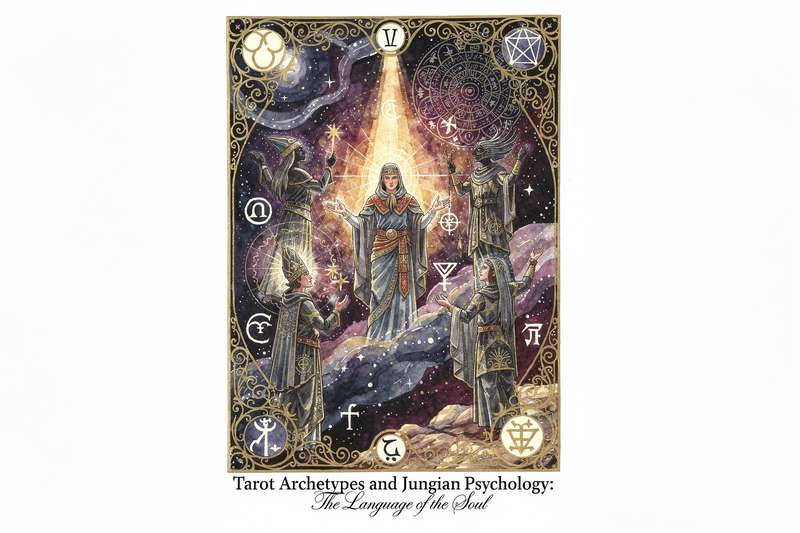
Tarot archetypes and Jungian psychology form a powerful bridge between ancient wisdom and modern depth psychology. When Carl Jung developed his theory of the collective unconscious—a shared wellspring of universal symbols and patterns—he unknowingly provided the perfect framework for understanding how tarot works. Though Jung never wrote directly about tarot, his archetypal psychology illuminates why these 78 cards resonate so deeply across cultures and centuries.
For many seekers, tarot isn’t about fortune-telling at all. It’s a symbolic mirror reflecting the patterns, conflicts, and potentials already alive in your psyche. The cards speak the language of archetypes—those timeless human experiences that show up in myths, dreams, and stories across every culture. When you understand tarot through this psychological lens, each reading becomes an opportunity for profound self-discovery.
The Tarot Archetypes at a Glance
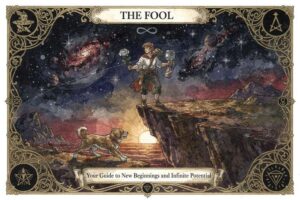
Approaching tarot as a psychological tool rather than a divination method transforms your relationship with the cards. The 22 Major Arcana cards, in particular, map directly onto Jungian archetypes—universal patterns that structure human consciousness. The Fool represents the innocent beginning of any journey. The High Priestess embodies the feminine principle of intuitive knowing. The Tower symbolizes the necessary destruction that precedes transformation.
These aren’t arbitrary symbols. They’re echoes of stories your psyche already knows: the hero’s journey, the wise elder, the shadow self, the sacred union. When a card appears in your reading, it’s activating a corresponding pattern within your own psychological landscape.
The tarot is not about predicting what will happen to you. It’s about recognizing what’s already happening within you.
Understanding Archetypal Meaning in Tarot
Jung proposed that all humans share access to the collective unconscious—a deep layer of the psyche containing archetypal images that transcend individual experience. These archetypes structure how we perceive reality, tell stories, and understand our lives. The Mother archetype, for example, appears across cultures as Gaia, Durga, Mary, or Hathor—each expressing the universal pattern of nurturing, protection, and unconditional love.
The Major Arcana operates as a catalog of these universal patterns. When you draw the Empress, you’re not just seeing a card—you’re encountering the Mother archetype itself, with all its layers of meaning: fertility, abundance, sensory pleasure, creative power. Your personal associations with motherhood will color the reading, but beneath those individual details lies a pattern every human psyche recognizes.
The Minor Arcana, meanwhile, explores how these archetypal energies manifest in everyday situations. The suit of Cups corresponds to the emotional realm and relationships. Wands represent creative fire and willpower. Swords map the mental realm of thought and conflict. Pentacles ground us in the physical world of body, work, and material resources.
The Anima, Animus, and Tarot’s Court Cards
One of Jung’s most valuable contributions to understanding human psychology is his concept of the anima and animus—the inner feminine and masculine principles that exist within every person, regardless of gender. The anima represents receptivity, intuition, emotion, and connection. The animus embodies action, logic, structure, and assertion. Psychological wholeness requires integrating both energies rather than identifying exclusively with one.
The tarot’s Court Cards beautifully illustrate this interplay. Queens and Kings don’t represent actual women and men—they symbolize different expressions of these archetypal energies. The Queen of Swords wields intellectual clarity with emotional maturity. The King of Cups balances masculine authority with feminine emotional depth. When these cards appear, they’re inviting you to explore how you embody and balance these energies in your own life.
This psychological approach frees tarot from rigid gender stereotypes. Your most authentic self likely contains a unique blend of anima and animus energies that doesn’t fit conventional categories—and that’s exactly as it should be.
The Shadow and Reversed Cards
Jung’s concept of the Shadow—the rejected, denied, or unconscious aspects of the self—finds perfect expression in reversed tarot cards. When a card appears upside-down, it often signals that the archetype’s energy is blocked, distorted, or operating in shadow. The reversed Emperor might indicate tyrannical control rather than healthy authority. The reversed Star could point to lost hope rather than renewed faith.
Shadow work through tarot means facing the cards you don’t want to see—the ones that make you uncomfortable, angry, or resistant. These difficult cards often carry your most valuable lessons. The Devil confronts you with your attachments and addictions. The Tower dismantles false structures you’ve outgrown. Death demands you release what’s finished to make space for renewal.
When you stop viewing tarot as prediction and start seeing it as psychological feedback, even the scariest cards become allies. They’re not warning you of external disasters—they’re illuminating internal patterns that need your attention.
Working with Tarot Archetypes in Daily Practice
Integrating Jungian principles into your tarot practice deepens every reading. Start by asking different questions. Instead of “Will I get the job?” try “What archetype am I embodying in my career right now?” Rather than “Does he love me?” explore “What inner patterns are showing up in this relationship?”
Pay attention to which archetypes appear repeatedly in your readings. If the Hermit keeps showing up, your psyche is calling you toward solitude and inner work. Frequent appearances of the Magician suggest you’re learning to consciously direct your will and manifest your intentions. These patterns reveal the psychological themes you’re currently processing.
Consider keeping an archetype journal alongside your tarot journal. When a card appears, research its mythological and psychological dimensions. How does the Strength card relate to the archetype of taming the beast? What does the Hanged Man teach about the necessary sacrifice that precedes enlightenment? This study enriches your readings with layers of meaning beyond simple keyword memorization.
Tarot as Active Imagination
Jung developed a therapeutic technique called active imagination—consciously engaging with the symbolic images arising from the unconscious. Tarot provides a structured framework for this practice. When you lay out cards and contemplate their imagery, you’re entering into dialogue with your own psyche through the medium of archetypal symbols.
This is why tarot “works” even if you don’t believe in divination or psychic powers. The cards create a container for your unconscious mind to communicate through synchronicity and projection. You see in the cards what you need to see—not because the cards are magic, but because your psyche is always seeking integration and wholeness.
Some practitioners use tarot for dreamwork, drawing a card to represent a dream’s core message or selecting cards that match dream symbols. Others use spreads to explore psychological complexes, relationship dynamics, or decision-making processes. The possibilities expand infinitely once you understand tarot as a psychological tool rather than a fortune-telling game.
Frequently Asked Questions
What is the connection between tarot and Jungian psychology?
Carl Jung’s theory of the collective unconscious and archetypal imagery provides a psychological framework for understanding tarot. The 22 Major Arcana cards correspond to universal archetypes—patterns like the Hero, Shadow, Wise Old Man, and Great Mother—that structure human consciousness across all cultures. Though Jung never wrote about tarot directly, his work explains why these symbolic images resonate so powerfully with the human psyche.
Do you need to believe in psychic powers to use tarot psychologically?
No. Tarot works as a psychological tool through projection and symbolic reflection, not supernatural prediction. When you contemplate the cards, your unconscious mind projects meaning onto the archetypal images, revealing patterns, conflicts, and potentials already present in your psyche. This process doesn’t require belief in divination—only openness to symbolic thinking and self-reflection.
What are the anima and animus in tarot?
Jung’s anima (inner feminine) and animus (inner masculine) are psychological principles present in everyone, regardless of gender. In tarot, the Queens and Kings don’t represent actual men and women but different expressions of these archetypal energies. Queens embody receptivity, intuition, and emotional depth, while Kings represent action, structure, and authority. Psychological wholeness requires integrating both energies rather than identifying with only one.
How do reversed tarot cards relate to Jung’s Shadow concept?
Reversed cards often indicate that an archetype’s energy is blocked, distorted, or operating in shadow—the unconscious, rejected aspects of the self. A reversed card invites you to examine where you’re resisting growth, clinging to outdated patterns, or avoiding necessary change. This shadow work is essential for psychological integration and becoming whole.