The Tarot Court Cards are the 16 personality archetypes within the deck, and they’re often the most challenging cards for readers to master. Unlike the numbered cards with their clear symbolic meanings, Court Cards represent living, breathing energies—people, personalities, and personal qualities that show up in readings as guides, challenges, or mirrors of yourself.
Whether you’re wondering if the Queen of Cups represents your empathetic friend, your own intuitive nature, or a message to cultivate more emotional wisdom, understanding these multifaceted cards transforms your readings from surface interpretations into profound character studies.
The Tarot Court Cards at a Glance
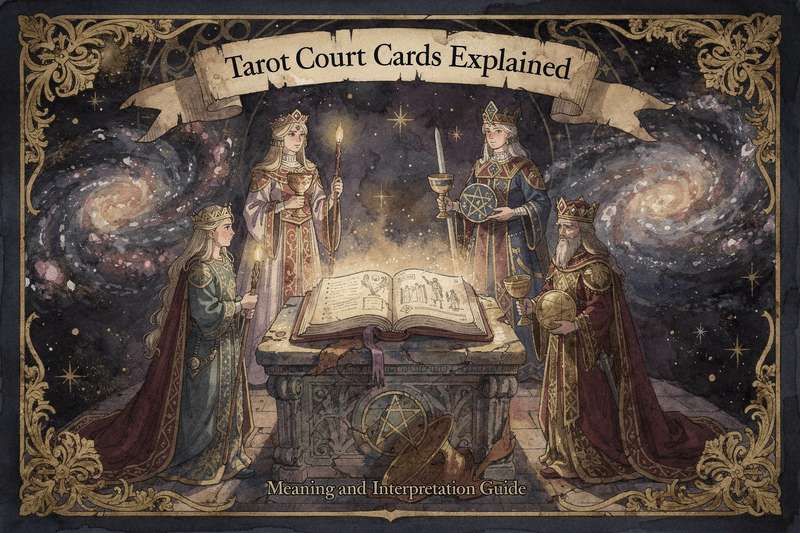
The Court Cards consist of four ranks across four suits, creating 16 unique personality portraits:
- Pages – The messengers and students, representing youthful energy, curiosity, and new beginnings in their suit’s domain
- Knights – The action-takers and extremists, embodying the pure, often excessive expression of their suit’s element
- Queens – The nurturers and internalized masters, representing the inward, receptive mastery of their element
- Kings – The leaders and externalized masters, embodying outward authority and confident command of their element
Each rank appears in all four suits (Wands, Cups, Swords, Pentacles), creating distinct personality combinations. The Page of Wands bursts with creative enthusiasm, while the King of Swords commands with intellectual authority. Your relationship with these 16 faces deepens every time you encounter them in readings.
Understanding Court Cards as People and Personalities
Most commonly, Court Cards represent actual people in your life or entering it soon. The card’s suit and rank provide clues about their personality, motivations, and how they operate in the world.
Wands Courts are your passionate go-getters—creative, enthusiastic, sometimes impulsive. They’re the friend who starts three businesses simultaneously or the partner whose energy lights up every room.
Cups Courts lead with emotion and intuition. These are your empaths, artists, and healers—people who feel deeply and create emotional safety for others, though they may struggle with boundaries.
Swords Courts operate through intellect and communication. Expect sharp minds, clear communicators, and people who value truth and mental clarity, sometimes at the expense of emotional sensitivity.
Pentacles Courts are grounded in the material world. These practical, reliable people build security through steady effort. They’re your financially savvy friend, your patient mentor, or the colleague who always follows through.
Beyond Physical Appearance
Traditional tarot books assign physical traits to Court Cards—hair color, age, gender. Discard this approach. In modern readings, Queens appear for men, Kings for women, and Pages for people in their seventies. What matters is energy, not demographics.
Instead, focus on personality traits and behavioral patterns. The Knight of Wands isn’t necessarily a young man with red hair; he’s anyone displaying restless enthusiasm, adventurous spirit, and a tendency to start projects without finishing them.
Court Cards as Aspects of Yourself
Sometimes a Court Card isn’t pointing to someone else—it’s reflecting you. When the Queen of Pentacles appears in your career reading, you might be called to embody her nurturing practicality and financial wisdom. The Knight of Swords in a conflict reading suggests you’re charging forward with intellectual force, perhaps too aggressively.
These cards invite you to examine which aspects of yourself are active, dormant, or overdeveloped. Are you being the impulsive Knight of Wands when you need the steady King of Pentacles? Is your inner Page of Cups telling you to explore creative vulnerability?
Each Court Card represents a way of being that you can consciously cultivate. Think of them as 16 different modes you can activate depending on what your situation requires.
Court Cards in Love and Relationship Readings
In matters of the heart, Court Cards reveal relationship dynamics with remarkable precision. When asking about a romantic interest, the Court Card that appears describes their personality, approach to love, and emotional style.
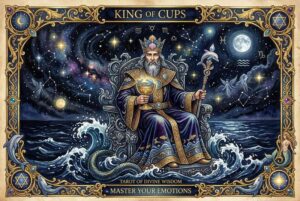
The King of Cups suggests a partner who’s emotionally mature, compassionate, and able to balance feeling with wisdom. The Knight of Wands warns of exciting but potentially fleeting passion—someone who sweeps you off your feet but may lack staying power.
Court Cards can also describe the dynamic between you and your partner. If you pull the Queen of Swords and King of Pentacles together, you’re looking at an intellectually sharp person paired with a grounded, practical partner—potentially complementary, but communication styles may clash.
For singles, Court Cards indicate what energy you’re projecting or what type of person you’re attracting. Repeatedly drawing Pages suggests you’re in a learning phase romantically, not yet ready for mature partnership.
Court Cards in Career and Professional Settings
Your work life is populated with Court Card personalities. The demanding boss might be the King of Swords—brilliant but intimidating. Your supportive mentor could embody the Queen of Pentacles, nurturing your professional growth with practical wisdom.
When a Court Card appears in career readings, ask yourself: Is this a person I need to work with, or a professional persona I need to adopt? Landing that promotion might require you to channel the King of Wands‘ confident leadership, even if you naturally express the more gentle Queen of Cups energy.
Pages in career readings often signal apprenticeship, learning phases, or messages arriving about opportunities. Knights indicate action—job changes, ambitious projects, or the energy needed to push initiatives forward. Queens and Kings suggest mastery and leadership roles, either achieved or required.
Navigating Workplace Personalities
Understanding Court Cards helps you work effectively with different personality types. When you recognize your colleague as the Knight of Swords, you know they’ll respond to logical arguments presented directly, not emotional appeals. The Queen of Cups co-worker needs emotional connection and collaborative environments to thrive.
Deepening Your Connection with the Court Cards
The secret to mastering Court Cards is making them personal. Abstract descriptions only take you so far—you need living examples.
Match Faces to Cards
Lay out all 16 Court Cards and assign each one a real person from your life. Your analytical sister might be the Queen of Swords. Your enthusiastic nephew is definitely the Page of Wands. That reliable friend who always has their finances in order? King of Pentacles.
Write these associations in your tarot journal. When these cards appear in readings, you’ll instantly understand the energy they represent because you know someone who lives it.
Court Card Conversations
Here’s a technique that brings personality dynamics to life: randomly select two Court Cards and imagine them meeting. What would the Queen of Wands and King of Swords talk about? She’d share her latest creative project with infectious enthusiasm; he’d offer strategic advice on implementation. They’d respect each other’s competence but might clash over her intuitive approach versus his need for logical planning.
This exercise trains you to see how different Court Card energies interact, which becomes invaluable when multiple appear in relationship or group dynamic readings.
The Court Cards and Personality Typology
Many readers connect the 16 Court Cards with the 16 Myers-Briggs personality types, creating fascinating correspondences. While no universal system exists, exploring these connections deepens your understanding of both frameworks.
The psychological depth of Court Cards extends beyond surface traits into core motivations and unconscious patterns. Carl Jung’s work on personality archetypes informed both the MBTI and tarot’s Court Card interpretations, creating natural bridges between these systems.
You might find that your MBTI type aligns with a Court Card you frequently draw. This isn’t coincidence—you’re recognizing your own energy signature in the cards.
Court Cards in Spiritual Development
From a spiritual perspective, the Court Cards map your evolution from student to master across four elemental domains. You’re not meant to embody just one card—you’re developing all 16 aspects throughout your lifetime.
The Pages represent your relationship with learning and beginner’s mind. Can you approach new spiritual practices with the Page of Cups‘ open-hearted curiosity? The Knights test your ability to channel pure elemental force—when do you need the Knight of Wands‘ courageous action versus the Knight of Pentacles‘ methodical persistence?
Queens and Kings show mastery, but different expressions of it. Queens represent the inner work—the Queen of Swords masters her own mind before teaching others. Kings represent external mastery—the King of Pentacles builds tangible security and shares resources generously.
Your spiritual journey involves developing all these aspects. Where are you a Page, still learning? Where have you achieved the Queen or King’s mastery? Which elements (fire, water, air, earth) flow naturally, and which challenge you?
Reading Court Cards in Practice
When a Court Card appears in your reading, work through these questions systematically:
- Is this a specific person? Does someone in your life match this personality? Consider whether it’s someone currently present or someone entering your situation soon.
- Is this an aspect of yourself? Are you currently embodying this energy, or is the card suggesting you should cultivate it?
- What’s the card’s message? Beyond identification, what is this personality teaching you? What approach or perspective does it offer?
- How does it interact with surrounding cards? Court Cards gain meaning through context. A Knight appears more significant next to the Three of Swords than next to the Six of Pentacles.
Multiple Court Cards in One Reading
When several Court Cards appear together, you’re looking at relationship dynamics, group situations, or multiple aspects of personality at play. Three or more Court Cards suggest your question involves navigating different people’s agendas or integrating conflicting parts of yourself.
Pay attention to which suits dominate. All Cups Courts indicate emotional intensity and relationship focus. Mixed suits suggest you’re balancing different approaches—perhaps your practical Pentacles side conflicts with your passionate Wands nature.
Common Challenges with Court Cards
New readers often struggle with Court Cards because they require interpretation beyond memorized meanings. You’re reading character and psychology, not fixed events. This demands more intuition and life experience.
If you consistently find Court Cards confusing, try these approaches:
- Keep a Court Card journal where you record every time you see each card, who it represented, and how the reading unfolded. Patterns will emerge.
- Study the elemental and rank meanings separately, then combine them. Page + Wands = youthful fire energy. Queen + Swords = mature, internalized air mastery.
- Remember that Court Cards can be situational. The King of Pentacles might represent your financial advisor role in one reading and your father in another.
- Trust your first impression. When a Court Card appears, notice who immediately comes to mind. That’s usually correct.
Frequently Asked Questions
Can Court Cards represent situations instead of people?
Yes, absolutely. The Knight of Wands might indicate a situation requiring bold action and enthusiasm rather than a specific person. The Queen of Cups could suggest a situation calling for emotional intelligence and compassion. Context determines whether you’re reading the card as a person, personality trait, or situational energy.
What does it mean when I keep drawing the same Court Card repeatedly?
Repeated Court Cards suggest you’re either dealing with a significant person matching that energy, or you’re being called to develop that aspect within yourself. If the King of Swords keeps appearing, you may need to embrace intellectual clarity and decisive communication. Alternatively, someone with that personality is playing a major role in your current chapter.
Do Court Cards always represent the same gender as shown on the card?
Not at all. Court Cards represent energy and personality, not physical gender or age. Queens frequently represent men, Kings appear for women, and Pages can indicate people of any age. Focus on the card’s elemental energy and maturity level, not the figure’s appearance.
How do I know if a Court Card is about me or someone else?
Look at the question you asked and the card’s position. In a spread about your behavior, Court Cards likely represent you. In a relationship spread with positions for “them,” Court Cards describe the other person. When unclear, check if the personality resonates with you or matches someone in your situation. Your intuition usually knows.