What Is Synastry & Why It Matters for Your Relationships
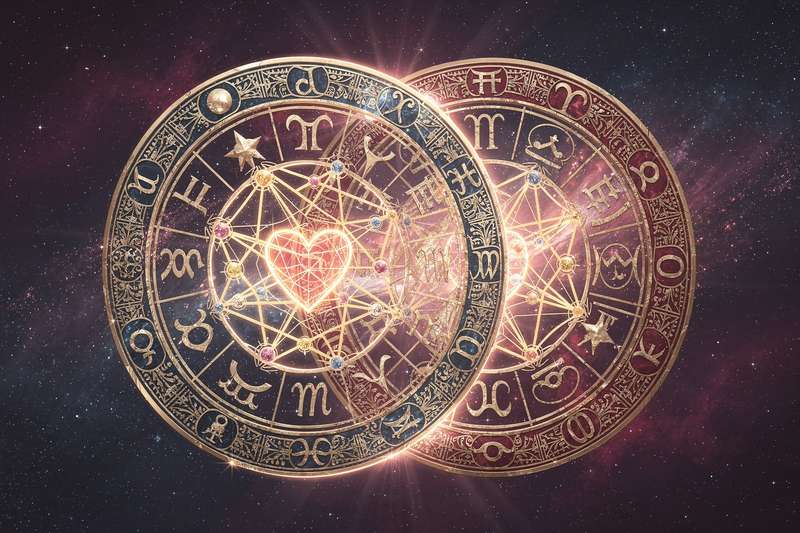
Synastry is the art of comparing two birth charts side by side. When you overlay your natal chart with another person’s chart, you’re essentially asking: “What energetic patterns show up between us?” This ancient practice reveals the strengths, challenges, and hidden dynamics that shape how you relate to each other.
You don’t need to be a seasoned astrologer to benefit from synastry. Understanding the major aspects between your chart and someone else’s gives you a roadmap for connection—showing you where harmony flows naturally and where you might need more patience and intention.
The Core Synastry Chart Aspects Explained
Synastry chart aspects are the angular relationships between planets in two charts. Think of them as conversations between celestial bodies. The distance between these planets, measured in degrees, creates different types of interactions. Some feel supportive and easy; others feel tense or challenging. Both matter. Both teach you something.
Synastry Conjunctions: When Energies Merge
A conjunction occurs when two planets sit within about 8 degrees of each other. This is an intensifying aspect—it turns up the volume on whatever planets are involved.
If your Venus (how you love) is conjunct their Mars (their drive and passion), you feel magnetic attraction. Chemistry happens naturally. If your Sun (your core self) is conjunct their Saturn (restriction and structure), the relationship may feel weighty or karmic. Neither is “good” or “bad”—conjunctions simply amplify.
You’ll experience more intensity and immediacy with conjunctions. The planets involved become entangled in each other’s energy, which can feel deeply bonding or overwhelming depending on the planets and your individual charts.
Synastry Trines: The Flow State Aspects
Trines happen when planets are roughly 120 degrees apart. This is considered the most harmonious angle in astrology. When you experience a trine in synastry, gifts and talents seem to flow between you with minimal friction.
Your Mercury (communication) trine their Mercury creates natural rapport in conversation. You understand each other quickly. Your Moon (emotions) trine their Moon means you naturally soothe each other. You just “get” each other’s feelings without lengthy explanation.
Trines are the aspects you want to notice and nurture. They show you where the relationship feels easiest and most natural. These are your relationship superpowers together.
Synastry Sextiles: Support and Opportunity
Sextiles form at about 60 degrees and carry a gentler, supportive energy than trines. Where trines feel effortless, sextiles require a little effort but reward you generously for it.
Your Venus sextile their Jupiter suggests mutual appreciation and generosity. You enjoy spending time together and tend to bring out each other’s optimism. These aspects require some conscious engagement, but they feel wonderful once activated.
Synastry Oppositions: The Magnetic Tension
Oppositions form when planets are roughly 180 degrees apart. Many people fear oppositions, but they’re misunderstood. Yes, they represent tension and contrast—but contrast is magnetic.
Your Sun opposite their Moon means you see things from opposite vantage points. You challenge each other, sometimes frustrate each other, but you also complete each other in important ways. Oppositions aren’t meant to be easy; they’re meant to grow you.
If your Mars (desire, assertion) opposes their Venus (values, aesthetics), you might want different things or approach intimacy differently. The work here is learning to meet in the middle, but when you do, the relationship deepens significantly.
Synastry Squares: Friction That Forges Growth
Squares happen at roughly 90 degrees. Like oppositions, squares get a bad reputation, but they’re actually catalysts for development. A square aspect creates productive tension—the kind that makes you work harder and show up more authentically.
Your Venus square their Mars might mean you want different things sexually or romantically, creating friction. But this friction, when worked with consciously, helps you learn compromise and find creative solutions. Squares demand maturity and honesty.
Reading Your Synastry Chart: Step-by-Step
Start by gathering both birth charts. You’ll need exact birth times for accuracy (this is crucial). Then plot the charts together and look for aspects between personal planets: Sun, Moon, Mercury, Venus, and Mars. These matter most for romantic and close relationships.
Next, notice which aspects appear most frequently. If you see mostly trines and sextiles, the relationship flows easily but might lack growth edges. If you see squares and oppositions, expect more work but potentially deeper transformation. Most healthy relationships contain a mix.
Pay special attention to Venus (love), Mars (passion), and the Moon (emotional needs). These three planets tell the story of whether you’re sexually compatible, emotionally attuned, and willing to work toward each other.
The Importance of Orbs in Synastry
Orbs are the allowable degree range for an aspect to “count.” For synastry, use tighter orbs than you might in natal astrology—usually 6 to 8 degrees maximum. The closer the aspect, the stronger its influence.
A Venus-Mars conjunction at 2 degrees is potent. A Venus-Mars conjunction at 8 degrees is still meaningful but slightly less intense. Outside 8 degrees, you’re stretching it, and the aspect likely won’t feel as present in the relationship.
Synastry Aspects by Planet Pair
The meaning of any aspect depends entirely on which planets are involved. Here’s what you need to know:
- Sun aspects show how your core identities interact. Harmonious Sun aspects mean you feel seen and supported. Challenging ones mean you trigger each other’s insecurities.
- Moon aspects reveal emotional compatibility. Your Moon placement shows your emotional needs. If your Moon aspects their Moon harmoniously, you naturally comfort each other.
- Venus aspects govern romantic attraction and affection. Your Venus shows how you give and receive love. Venus-to-Venus aspects reveal romantic compatibility directly.
- Mars aspects indicate sexual chemistry and how you handle conflict together. Mars-to-Venus aspects between charts create sexual attraction; Mars-to-Mars aspects show how competitive or cooperative you are.
- Mercury aspects determine how well you communicate. Good Mercury contacts mean conversations flow. Difficult ones mean misunderstandings happen frequently.
The Shadow Side: Working With Challenging Synastry Aspects
Not every aspect in your synastry chart will feel good. That’s not a sign the relationship is doomed—it’s information about where you need consciousness.
If you have difficult aspects, ask yourself: What is this challenging my growth? Where am I being asked to stretch? Challenging synastry aspects often point to the deepest healing and transformation a relationship can offer.
A partner who squares your Venus might frustrate you romantically, but they also teach you that love isn’t always comfortable or convenient. A partner whose Saturn aspects your Sun might feel heavy, but they also help you build genuine maturity and self-respect.
Using Synastry Beyond Romance
You can read synastry between anyone: family members, business partners, friends, collaborators. The same principles apply. Which aspects between you create natural flow? Which require navigation?
With a business partner, strong Mercury and Saturn aspects suggest you can communicate clearly and build something structured. With a friend, Moon and Venus aspects predict emotional attunement and loyalty.
What Synastry Can’t Tell You
Synastry is powerful, but it isn’t destiny. A beautiful synastry chart doesn’t guarantee a relationship will work if you’re not both willing to show up. Conversely, challenging aspects don’t doom a relationship if you’re committed to understanding and evolving together.
Synastry shows potential and patterns. The actual relationship is built through choice, intention, and presence. Use your synastry chart as a guide, not a verdict.
FAQ
What synastry aspects are best for relationships?
Trines and sextiles between personal planets create the easiest flow. Venus-Mars trines suggest natural sexual chemistry. Moon trines indicate emotional ease. Sun trines mean your identities naturally support each other. However, some challenging aspects are also valuable—squares and oppositions create growth and depth when you work with them consciously.
Can synastry predict if a relationship will last?
Synastry shows compatibility patterns and areas of ease and tension, but it cannot predict whether a relationship will last. Commitment, communication, and choice matter far more than astrological aspects. A couple with difficult synastry can absolutely create a lasting, beautiful relationship through intentional work. Conversely, perfect aspects don’t guarantee longevity.
How accurate is synastry without an exact birth time?
Synastry becomes less accurate without exact birth times. The Moon and Rising sign shift approximately every two hours, which affects house placements and Moon-based aspects significantly. If you don’t have exact times, ask your family, check your birth certificate, or contact the hospital where you were born. Even a general time window helps refine accuracy.
Should I break up if our synastry chart shows difficult aspects?
No. Difficult synastry aspects often indicate areas where you can grow tremendously together. Squares and oppositions require maturity and honest communication, but they create depth and transformation. Before making any decision, consider whether the relationship feels loving and safe in person, regardless of the chart.
What’s the difference between synastry and composite charts?
Synastry compares two natal charts directly, showing you how the planets interact. A composite chart is created by finding the midpoints between matching planets in both charts, creating a single chart that represents the relationship itself. Both tools are valuable—synastry shows individual dynamics, while the composite chart shows the relationship’s overall energy and purpose.