What Is Cartomancy?
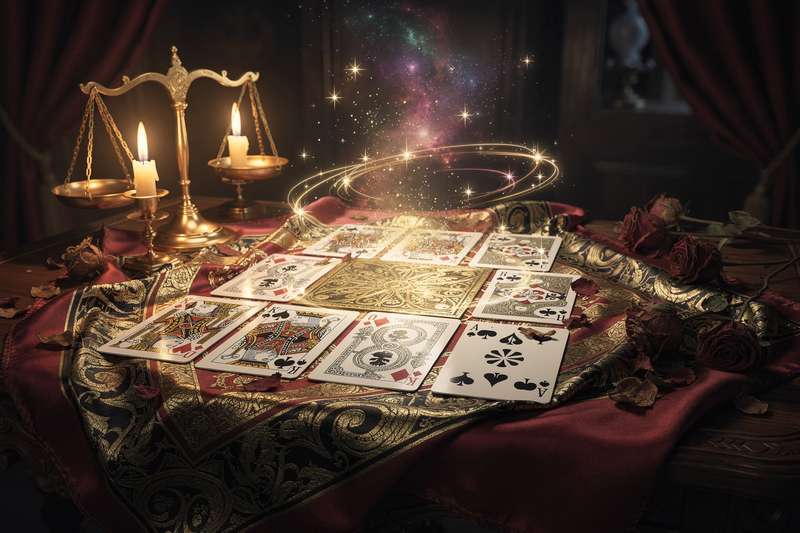
Cartomancy is the art of divination using a standard 52-card playing deck—the same cards you’d use for poker, bridge, or gin rummy. Instead of relying on tarot’s elaborate symbolism, you’re working with a simpler, more accessible tool that’s been used for centuries to reveal insights about your past, present, and future.
The term “cartomancy” originally referred to any card-based divination practice, but today it specifically means fortune-telling with ordinary playing cards. What makes this practice special is its directness. You don’t need expensive decks, years of study, or a special gift to begin. If you have a deck of cards and the willingness to listen to your intuition, you’re ready to start.
A Brief History of Playing Card Divination
Playing cards emerged in Europe during the 14th century, and it didn’t take long for people to recognize their potential beyond gaming. Different cultures developed their own decks and interpretations, making the exact origins of cartomancy difficult to pinpoint. What we do know is that this practice gained real traction in royal courts and among nobility who sought guidance about political outcomes and personal matters.
There’s a popular (though unverified) story that Napoleon himself consulted cartomancers before his military campaigns. Whether or not that’s true, it speaks to how seriously people have historically taken card reading as a spiritual tool. Today, cartomancy has experienced a quiet renaissance among those seeking practical divination methods that don’t require extensive training.
Cartomancy vs. Tarot: What’s the Real Difference?
You’ve probably heard of tarot reading—it’s far more mainstream than cartomancy. Both practices use cards to access spiritual insight, but they work quite differently.
- Card count: Tarot uses 78 cards; cartomancy uses 52
- Visual complexity: Tarot features intricate, artistic imagery; playing cards have simple, uniform designs
- Interpretation style: Tarot readings rely heavily on your intuition and the reader’s personal connection to symbols; cartomancy provides more fixed, defined meanings for each card
- Accessibility: You probably already own a playing card deck; tarot requires purchasing a specialized deck
- Clarity: Tarot offers layered, symbolic answers; cartomancy tends toward straightforward, literal responses
If you find tarot’s open-ended symbolism overwhelming, cartomancy might be your answer. If you appreciate having clear reference points and don’t own a tarot deck, cartomancy removes those barriers completely.
Understanding the Four Suits and Their Meanings
Just like tarot, playing cards are divided into suits, and each suit carries its own thematic energy.
Hearts: Love, Emotion, and Relationships
Hearts represent the emotional realm—matters of the heart, relationships, feelings, and personal connections. When hearts appear in your reading, pay attention to what’s happening in your love life and emotional well-being. These cards often speak to joy, companionship, and inner fulfillment.
Diamonds: Money, Material Matters, and Prosperity
Diamonds govern everything financial and material. Think money, business deals, property, resources, and practical abundance. When diamonds show up, they’re usually answering questions about your career, finances, or physical security.
Clubs: Growth, Work, and Creative Energy
Clubs represent action, growth, and hard work. These are the cards of ambition, creative projects, personal development, and the effort required to manifest your goals. Clubs often indicate movement and positive momentum in your life.
Spades: Challenges, Transformation, and Truth
Spades are sometimes feared, but they’re actually important teachers. They represent challenges, obstacles, necessary change, and difficult truths. Rather than being “bad,” spades cards ask you to face reality and prepare for transformation. They’re honest cards.
Card Meanings at a Glance
Within each suit, cards carry progressively deeper meanings as the numbers increase. Here’s a quick reference:
- Aces: New beginnings, fresh energy, potential
- Twos: Partnership, balance, decisions
- Threes: Creativity, communication, expansion
- Fours: Stability, rest, foundations
- Fives: Conflict, tension, change
- Sixes: Harmony, progress, movement forward
- Sevens: Reflection, spiritual insight, inner knowledge
- Eights: Power, action, momentum
- Nines: Completion, fulfillment, wisdom gained
- Tens: Cycles ending, new chapters beginning
- Jacks: Youth, messages, new perspectives
- Queens: Feminine power, nurturing energy, receptivity
- Kings: Authority, masculine power, leadership
These meanings shift slightly depending on your specific question and the cards surrounding them in your spread, but this foundation will carry you far as a beginner reader.
Step-by-Step: How to Perform Your First Reading
Prepare Yourself and Your Space
Before you shuffle, take a moment to center yourself. Find a quiet place where you won’t be interrupted. If you like, light a candle or burn some incense to create a calm atmosphere. This isn’t about superstition—it’s about signaling to your mind that you’re entering a reflective space.
Clear your energy. Take a few deep breaths. Set an intention: “I’m open to receiving clear guidance.” This simple act aligns your awareness with your intuition.
Shuffle with Purpose
Hold your deck and think about your question while you shuffle. You’re infusing your energy and intention into the cards. There’s no “right” way to shuffle—just do it in a way that feels natural to you. Some readers do multiple shuffles; others do one deliberate shuffle. Trust your instinct here.
Lay Out Your Spread
For your first readings, start simple. We’ll cover spreads in detail below, but begin with either a single-card pull or a three-card spread (past, present, future). As you gain confidence, you’ll experiment with more complex layouts.
Draw Your Cards
Cut the deck if you feel called to do so, then draw your cards. Some readers allow the person being read for to draw; others do it themselves. Again, no wrong way—choose what feels right.
Interpret with Confidence
Look at each card’s suit and number. Reference your meanings. Notice how the cards relate to each other. Does a narrative emerge? Trust what comes to you. Your intuition often speaks before your logical mind catches up. Write down your impressions, even if they seem strange at first.
Reflect and Record
After your reading, spend a few moments sitting with what you’ve discovered. Write it down. Over time, you’ll notice patterns in how cards appear in your readings and how their messages unfold in your actual life. This builds your confidence and deepens your understanding.
Common Cartomancy Spreads
The Single Card Pull
Draw one card to answer a yes-or-no question or to receive a message for the day. This is perfect when you need quick guidance or want to check in with your intuition. Simplicity is its strength.
The Three-Card Spread
The most popular beginner spread. Draw three cards representing past, present, and future—or situation, action, and outcome. This layout tells a story and is flexible enough to work with almost any question.
The Nine-Card Spread
A more detailed reading arranged in a 3×3 grid. This spread offers nuance and covers multiple layers of a situation: the foundation, current energy, challenges, support, hopes, fears, near future, and final outcome. It requires more interpretation but rewards you with rich detail.
The Horseshoe Spread
Arrange seven cards in a horseshoe shape. Each position represents a different aspect: current situation, obstacles, influences, advice, near future, external factors, and outcome. This spread is excellent for complex questions.
Common Mistakes Beginners Make
You’re going to make these mistakes—everyone does. The good news is they’re easy to correct.
Forcing meanings to fit your hopes: It’s tempting to interpret cards the way you want them to mean, especially when you’re hoping for a particular outcome. Practice honest reading. If a card suggests a challenge, acknowledge it. The most helpful readings are truthful ones.
Reading when you’re emotionally overwhelmed: Your energy absolutely affects your reading. If you’re anxious, angry, or desperate for answers, pause. Return when you’re calmer. You’ll get clearer guidance.
Memorizing meanings rigidly: The meanings I’ve shared are starting points, not gospel. As you practice, you’ll develop your own interpretations based on how cards consistently appear in your life. Stay flexible.
Overthinking card combinations: Not every combination has hidden significance. Sometimes a Five of Diamonds just means financial tension. Don’t invent complexity where it doesn’t exist.
Ignoring your intuitive hits: The opposite mistake: sometimes your gut tells you something the card’s standard meaning doesn’t. Honor that inner knowing. Your intuition is your greatest tool.
Building Your Practice
Start reading for yourself daily if possible. Pull a single card each morning as your message for the day. Observe what happens. At the end of each week, review your notes. You’ll notice genuine correlations between your readings and your life.
Once you’re comfortable, offer to read for friends. Their questions will stretch your abilities. You’ll discover which spreads resonate with you. You’ll learn how to handle the responsibility of offering guidance to others.
Keep a reading journal. Write the date, your question, the cards you pulled, your interpretation, and what actually unfolded. Six months from now, looking back at these entries will be astonishing. Your accuracy will improve, and your confidence will soar.
Trust the process. Cartomancy isn’t about predicting a fixed future—it’s about reflecting your current path and the energies moving through your life right now. The cards show you possibilities and patterns. What you do with that information is entirely up to you.
FAQ
Do I need a special deck of playing cards for cartomancy?
No. Any standard 52-card deck works perfectly. You don’t need antique cards, fancy cards, or special decks. Many experienced cartomancers use simple drugstore decks. What matters is your intention and practice, not the deck’s appearance.
Can cartomancy predict the future with certainty?
Cartomancy reveals probable outcomes based on current energies and your present path, but nothing is fixed. Your choices, actions, and shifts in perspective can change what unfolds. Think of card readings as showing you the direction you’re heading right now—not a destiny you can’t alter.
How do I know if I’m interpreting cards correctly?
Pay attention to what resonates. Does a card’s meaning make sense with your question? Does it spark insight or recognition? Over time, you’ll notice patterns between your readings and real events. Accuracy builds through practice and honest reflection. Trust your growing intuition.
Can anyone learn cartomancy, or do you need psychic abilities?
Anyone can learn cartomancy. You don’t need special gifts or powers. What you need is willingness to practice, openness to your intuition, and honesty in your interpretations. Your intuition is a skill that strengthens with use, like a muscle. Everyone has it.
Is cartomancy the same as fortune-telling?
Cartomancy is one form of fortune-telling, but fortune-telling is broader. Fortune-telling includes tarot, oracle cards, palm reading, numerology, and other methods. Cartomancy is specifically the practice of reading playing cards for insight and guidance.
Should I reverse cards if they come out upside down?
This is entirely your choice. Some readers work with reversed cards (cards that appear upside down carry inverted or blocked meanings), while others ignore reversals and only work with upright meanings. As a beginner, ignoring reversals keeps things simpler. You can add this complexity later if you wish.