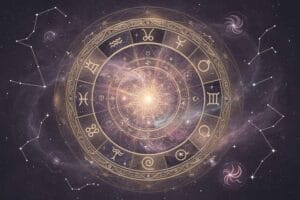
Your birth chart is the cosmic snapshot of who you are. Captured at the exact moment you entered the world, it maps where every planet was positioned in the sky from your birth location. This isn’t mysticism for its own sake—it’s a personal reference guide that shows your strengths, inclinations, emotional patterns, and the unique gifts you brought into this lifetime. Think of it as your spiritual resume, written in planetary language.
What Is a Birth Chart and Why It Matters
A birth chart—also called a natal chart—is fundamentally an astronomical map translated into psychological and spiritual insight. At the moment you were born, the Sun, Moon, Mercury, Venus, Mars, Jupiter, Saturn, Uranus, Neptune, and Pluto all occupied specific degrees in the zodiac. Your rising sign (or Ascendant) was also locked in place, along with the positions of the lunar nodes and other sensitive points. Together, these placements create a fingerprint that’s uniquely yours.
Why does this matter? Because your birth chart reveals patterns. It shows you where your natural talents lie, what emotional needs drive you, how you communicate, what you value in relationships, and where you’re likely to experience growth. Unlike sun sign astrology—which reduces you to one of twelve boxes—your full birth chart honors your complexity. You might be a fiery Aries sun but have a sensitive Pisces moon and a commanding Leo rising. Each layer adds dimension.
The Key Components of Your Astrology Chart
Reading your birth chart begins with understanding its building blocks. Here are the essential elements:
The Big Three: Sun, Moon, and Rising Sign
Your Sun sign is your core identity and life purpose. It’s what most people mean when they ask, “What’s your sign?” The Sun represents your essential self, your ego, your conscious will. If your sun is in Gemini, you’re wired for curiosity and communication.
Your Moon sign is your inner emotional landscape. Where your Sun is what you project, your Moon is what you feel privately. A Capricorn sun might seem controlled, but with a Cancer moon, they’re deeply family-oriented and sensitive beneath the surface. Your Moon sign shapes your needs in relationships and how you process feelings.
Your Rising sign (Ascendant) is the mask you wear, the first impression you give. If you were a book, your rising sign would be the cover. A Scorpio rising comes across intense and mysterious, even if their sun and moon are in lighter signs. The rising sign governs your appearance, your manner, and how others perceive you before they know you.
The Personal Planets: Mercury, Venus, and Mars
Mercury shows how you think and communicate. Mercury in Virgo speaks precisely; Mercury in Sagittarius speaks expansively. This placement shapes your learning style, your sense of humor, and how you handle information.
Venus reveals what you love and how you love. Your Venus sign shows what you’re attracted to romantically, aesthetically, and socially. Venus in Libra seeks balance and beauty in relationships; Venus in Scorpio craves depth and transformation. This planet also governs money and values.
Mars is your drive, passion, and aggression (in the healthy sense). It shows how you pursue what you want, how you assert yourself, and your sexuality. Mars in Leo pursues boldly and theatrically; Mars in Virgo is strategic and efficient.
The Social Planets: Jupiter and Saturn
Jupiter represents expansion, luck, and where life comes easily. It’s your growth planet. Jupiter in the 7th house might mean relationships flow naturally; Jupiter in the 10th suggests career abundance.
Saturn represents structure, discipline, and where you face challenges that strengthen you. Saturn isn’t punishment—it’s the planet of mastery. Saturn in Pisces might struggle with boundaries but learns profound compassion through practice.
The Outer Planets: Uranus, Neptune, and Pluto
These planets move slowly and are shared by your entire generational cohort, but their house and sign placements still matter. Uranus brings innovation and disruption, Neptune brings dreams and illusion, and Pluto brings transformation and power. Their house placements show where these archetypal energies most strongly influence your life.
The Lunar Nodes
The North Node shows your soul’s growth direction—the qualities you’re developing in this lifetime. The South Node shows your past-life gifts and what you’re learning to release. If your North Node is in Libra, you’re here to learn relationship skills and diplomacy.
How to Calculate and Obtain Your Birth Chart
You need three pieces of information: your birth date, your birth time, and your birth location. The birth time is crucial because it determines your rising sign and house placements. If you don’t know your exact time, check your birth certificate, contact your state’s vital records office, or ask your parents.
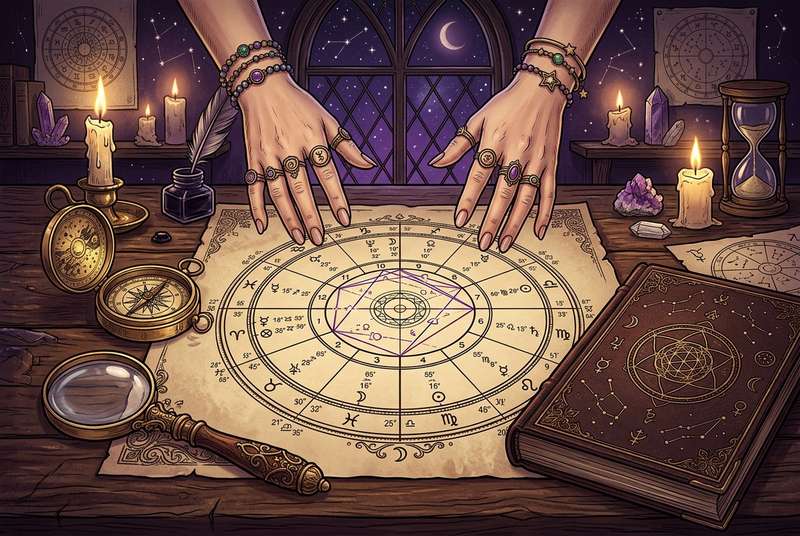
Once you have this information, generating your chart is straightforward. Multiple reputable online services provide free natal charts with interpretations. Input your birth data, and within seconds, you’ll see a circular chart divided into twelve houses with planets and signs marked throughout.
If you don’t have a birth time, you can still generate a “noon chart” using 12:00 PM as an estimate. You won’t get an accurate rising sign or house placements, but you’ll still see your sun, moon, and personal planet positions—enough to begin exploring.
Understanding the Twelve Houses
Beyond the planets and signs, your chart is divided into twelve houses. Each house governs a life area, and the planets within them show how those energies manifest in your lived experience.
- 1st House (Self): Your appearance, personality, how you come across
- 2nd House (Resources): Money, possessions, self-worth
- 3rd House (Communication): Thinking style, siblings, short journeys, learning
- 4th House (Home & Family): Family roots, home, private life, parents
- 5th House (Creativity & Romance): Romance, creativity, children, self-expression
- 6th House (Work & Health): Daily routines, health, service, work environment
- 7th House (Relationships): Partnerships, marriage, open enemies, contracts
- 8th House (Transformation): Shared resources, intimacy, psychology, death/rebirth
- 9th House (Expansion): Travel, higher learning, philosophy, spirituality
- 10th House (Career & Legacy): Career, public image, authority, reputation
- 11th House (Community): Friendships, groups, hopes, technology
- 12th House (Spirituality): Spirituality, the subconscious, hidden matters, solitude
When a planet sits in a house, that planet’s energy activates that life area. Mars in the 7th house means passion and assertion in relationships. Moon in the 12th house suggests emotional depth but a need for privacy and spiritual processing.
Reading Aspects: How Planets Talk to Each Other
Your chart isn’t just a list of placements—it’s a conversation. The angles (called aspects) between planets show how they collaborate or create tension.
Harmonious aspects (trines and sextiles) show flow and ease. A trine between your Sun and Jupiter might mean you bounce back quickly from setbacks.
Challenging aspects (squares and oppositions) create friction that pushes you to grow. A square between your Moon and Mars might make emotional expression feel complicated, but it develops emotional strength.
Conjunctions (planets near each other) blend energies intensely. Sun conjunct Venus might make you naturally magnetic and relationship-focused.
These aspects don’t predict your life—they show your inner dynamics. A challenging aspect isn’t a curse; it’s an invitation to develop resilience and self-awareness.
How to Work With Your Birth Chart
Once you understand your chart, you can use it as a tool for self-awareness and growth.
Identify Your Patterns
Look for themes. If you have several planets in fire signs, you’re naturally action-oriented. If you have many planets in the 8th house, you’re drawn to depth, psychology, and transformation. These patterns explain your behaviors and preferences.
Understand Your Emotional Needs
Your Moon sign shows what you actually need to feel secure, even if your Sun and rising sign project something different. A Capricorn sun who appears composed might have a Taurus moon that needs physical comfort and stable routines. Honoring your Moon sign’s needs improves your emotional resilience.
Leverage Your Strengths
Your chart shows where you have natural talent. Venus in the 10th house might find career success in aesthetics or diplomacy. Mercury in the 9th might thrive in teaching or writing. Work with these strengths rather than against them.
Address Growth Areas
Challenging placements aren’t problems to fix—they’re skills to develop. A weak Mars placement doesn’t mean you’re powerless; it means learning healthy assertion is your work. That work, completed, becomes your superpower.
Journal With Your Chart
Use prompts like: “My North Node is in [sign]. What qualities am I developing?” or “My [planet] in [house] shows I tend to [pattern]. How can I express this more consciously?” Writing with your chart creates dialogue between your conscious and unconscious self.
Common Misconceptions About Birth Charts
- “My birth chart predicts my future.” Your chart shows tendencies and potentials, not certainties. You have agency in how you express these energies.
- “I need to know my exact birth time to get value from my chart.” You can learn plenty from your sun, moon, and personal planets without precision timing. The chart becomes richer with exact time, but isn’t useless without it.
- “If my chart has hard aspects, I’m doomed.” Hard aspects create friction that builds character. Many successful people have challenging charts because they’ve developed resilience.
- “My sun sign is all that matters.” Your sun sign is just one layer. Your moon, rising, and personal planet placements are equally important to understanding yourself.
- “Astrology is about luck or fate.” Your chart is about psychology, pattern recognition, and self-knowledge. It illuminates who you are and what you’re working with, not what will happen to you.
- “Everyone with the same sun sign is the same.” Two Leos with different moon signs, rising signs, and planetary placements will be completely different people.
FAQ
What’s the difference between a birth chart and a natal chart?
Birth chart and natal chart are the same thing. “Natal” simply means “at birth,” so both terms refer to your astrology chart calculated for your exact birth moment.
Can I calculate my birth chart without knowing my birth time?
Yes, you can generate a noon chart using 12:00 PM as your time. You won’t get an accurate rising sign or house placements, but your sun, moon, and personal planet positions will be correct or very close.
How often does my birth chart change?
Your birth chart never changes. It’s fixed at the moment you were born. What changes are the current planetary positions (transits), which interact with your natal chart and create movement in your life.
Is my birth chart the same as my horoscope?
No. Your birth chart is the map of your personality and potential. A horoscope is a prediction or general forecast based on current planetary movements, typically written for your sun sign.
Final Thoughts
Your birth chart is an invitation to know yourself more fully. It doesn’t determine your destiny, but it does clarify your nature. You came into the world with certain gifts, challenges, emotional patterns, and growth edges. Your chart names these things and gives you language for understanding yourself.
Whether you’re new to astrology or returning to it with fresh eyes, your birth chart is waiting to teach you something true about who you are. The planets have no agenda but reflection. What you do with that reflection is entirely up to you.