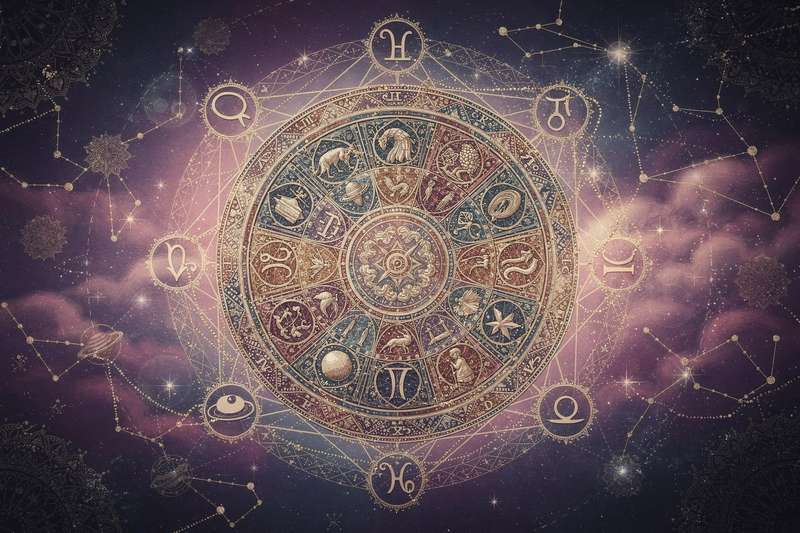
Indian matchmaking astrology types go far deeper than a simple horoscope comparison — and if the wildly popular Netflix series Indian Matchmaking introduced you to this world, you’re standing at the entrance of something genuinely ancient and layered. Rooted in Jyotish (Vedic astrology), the traditional South Asian approach to marriage compatibility is a multi-dimensional system that has guided families for thousands of years. It draws on three distinct methods: face reading (physiognomy), Vedic natal chart analysis, and Kundali matching — each one a different window into who you are and who you might build a life with.
This is not sun-sign horoscope territory. The tradition accounts for the precise positions of multiple planets at the moment of your birth, the lunar mansion your moon occupied, the structure of your physical face, and a scored compatibility framework spanning 36 points across eight categories. By the time you finish reading, you’ll have a clear picture of how each system works — and what it genuinely can and cannot tell you.
What Is Vedic Astrology — and Why It Powers Indian Matchmaking
At the heart of all Indian matchmaking astrology is Jyotish, translated as “the science of light.” This tradition traces its roots to the Vedas — ancient Hindu scriptures that rank among the oldest continuous bodies of knowledge still in active practice. While Jyotish shares some structural vocabulary with Western astrology (planets, signs, houses), it operates on a fundamentally different foundation.
The central distinction lies in the zodiac system each tradition uses. Western astrology anchors its zodiac to the seasons and the spring equinox, producing what is called the tropical zodiac. Vedic astrology tracks the actual positions of constellations against the night sky — this is the sidereal zodiac. Because the Earth slowly wobbles on its axis over millennia (a phenomenon called the precession of the equinoxes), these two zodiacs have gradually shifted apart by roughly 23 to 24 degrees. That gap is called the ayanamsa.
The practical result: if you were born in mid-to-late April, Western astrology places you firmly in Taurus. Under the sidereal system, you may fall in late Aries or early Taurus depending on the exact date and year. These differences have real consequences when assessing compatibility — which is why Vedic matchmakers always work from precisely calculated sidereal charts rather than tropical ones.
Another key distinction: in the Vedic system, your moon sign carries considerably more weight than your sun sign, because it reflects your emotional inner world — the patterns of how you feel, attach, and respond in close relationships. In matchmaking, the moon sign is typically the first placement a Jyotish practitioner examines.
The Three Core Signs in Vedic Matchmaking Astrology
Before any compatibility work begins, every individual is understood through three primary astrological identifiers. Think of these as three different angles on the same person — each one illuminating a different layer of who they are.
Sun Sign (Surya Rashi): Core Identity and Purpose
Your sun sign — called Surya Rashi in Sanskrit — reflects your fundamental identity, your life goals, and the way you assert yourself in the world. It shapes career ambitions and leadership style. A Leo (Simha) sun tends toward warmth and a desire to be seen and appreciated; a Scorpio (Vrishchika) sun tends toward intensity, privacy, and transformative drive. In matchmaking, the sun signs of both partners are weighed to see whether their core life directions are pointing in compatible directions — or pulling against each other.
Moon Sign (Chandra Rashi): Emotional Needs and Instincts
Your moon sign — Chandra Rashi — is often considered the single most important factor in Vedic compatibility analysis. It governs your emotional needs, your subconscious patterns, and what makes you feel genuinely safe and at home in a relationship. A Cancer (Karka) moon craves nurturing and emotional security; a Capricorn (Makara) moon operates more through duty, structure, and measured affection. These two moon energies can coexist beautifully, but they require conscious effort and honest conversation to avoid one partner feeling emotionally neglected and the other feeling smothered. Vedic matchmakers treat moon sign harmony as one of the most reliable predictors of long-term domestic happiness.
Rising Sign (Lagna): Outward Expression and Daily Life
Your rising sign — the Lagna — is the zodiac sign that was climbing above the eastern horizon at the exact moment of your birth. It shapes how others experience you on first meeting, your physical constitution, and the lens through which all your other planetary influences express themselves in daily life. A Libra (Tula) rising approaches relationships and conflict with diplomacy and a deep instinct for fairness; an Aries (Mesha) rising moves through the world with directness and forward momentum. Calculating the Lagna accurately requires your birth time to within just a few minutes — even a small error can shift the rising sign entirely and alter the whole chart’s interpretation.
The Three Main Types of Indian Matchmaking Astrology
Within the tradition of astrologically guided matchmaking, three distinct methods are most commonly employed. Each one reveals a different dimension of a person’s nature — and together, they create a remarkably holistic picture.
1. Face Reading (Physiognomy Astrology)
The most visually striking of the Indian matchmaking astrology types is face reading, known formally as physiognomy. Practiced in various forms across many ancient cultures, face reading operates on the principle that each feature of your face corresponds to a specific planet and zodiac sign. The shape of your forehead, the width of your jaw, the structure of your nose — each is believed to carry astrological information encoded in physical form.
A trained face-reading astrologer will analyze both individuals separately before assessing how their energies might interact in person. A Jupiter-shaped face, for example, is traditionally associated with expansiveness, generosity, and a kind of determined persistence that can read as stubbornness when unchecked. When two faces are read together, the practitioner looks for complementary planetary correspondences — shapes and features that suggest natural harmony rather than persistent friction in close proximity.
Face reading works best as an intuitive, one-on-one reading rather than a rigid predictive compatibility tool. Its deeper value lies in helping you understand the quality of your own energy — and whether it naturally blends with someone else’s.
2. Vedic Natal Chart Reading (Jyotish)
The second method is a full Vedic natal chart reading — a comprehensive astrological portrait built from your exact birth time, date, and location. Your natal chart is called a Kundali (the Sanskrit and Hindi word for birth chart). A Jyotish practitioner reads the positions of all the planets across twelve houses of the sidereal zodiac to understand your strengths, tendencies, karmic patterns, and life path.
In matchmaking, natal readings are conducted for each person before any comparison begins — the astrologer needs to understand who each individual is before assessing how they might fit together. Several planets receive particular attention:
- Venus (Shukra) — governs love, desire, beauty, and how you give and receive affection
- Mars (Mangal) — governs passion, physical energy, conflict style, and personal drive
- Saturn (Shani) — governs commitment, endurance, discipline, and long-term durability in relationships
The 7th house of the chart — the house of marriage and one-on-one partnership — and its ruling planet receive especially careful attention. The condition of this house tells a Jyotish astrologer a great deal about what a person needs from committed partnership and what patterns they may bring into it.
Many Vedic practitioners also recommend specific gemstones alongside their chart readings, bridging astrological guidance with the tradition of crystal wisdom. Blue sapphire, for instance, is classically associated with Saturn and is sometimes suggested to help bring Saturn’s qualities of steadiness and endurance into greater balance.
3. Kundali Matching (Astrological Synastry)
The third and most central of the Indian matchmaking astrology types is Kundali matching — a full compatibility reading in which two birth charts are placed side by side and examined across multiple dimensions: emotional resonance, intellectual alignment, physical chemistry, spiritual harmony, and long-term staying power.
This is what matchmakers mean when they speak of “horoscope matching.” It’s an in-depth analysis of how your planets interact with your partner’s planets across both charts — whether those interactions create support, challenge, or something that requires sustained conscious work.
Central to this process is an understanding of the three primary qualities from Vedic philosophy — the Gunas:
- Sattva — the quality of harmony, clarity, and constructive goodness
- Rajas — the quality of passion and dynamic activity, which can tip into restlessness when unbalanced
- Tamas — the quality of inertia and groundedness, which can tip toward stagnation when unexamined
Understanding which of these qualities dominates in each person’s chart helps reveal whether two people’s energies will feel naturally complementary — or whether they’ll require constant, effortful recalibration to find equilibrium.
The Ashtakoota System: Scoring Vedic Matchmaking Compatibility
One of the most structured — and fascinating — elements of Indian matchmaking astrology is the Ashtakoota system: an eightfold compatibility scoring framework. “Ashta” means eight, “Koota” means group or category. Together, these eight categories produce a total compatibility score of 36 points.
Here’s a simplified breakdown of the eight Kootas and what each one measures:
- Varna Koota — spiritual and dharmic compatibility (1 point)
- Vashya Koota — the dynamic of mutual attraction and trust between partners (2 points)
- Tara Koota — health and long-term wellbeing within the relationship (3 points)
- Yoni Koota — physical and intimate compatibility (4 points)
- Graha Maitri Koota — mental and intellectual harmony, assessed through the moon sign ruling planets (5 points)
- Gana Koota — temperament compatibility: divine, human, or primal nature (6 points)
- Rashi Koota — the compatibility of the moon signs themselves (7 points)
- Nadi Koota — physiological and energetic compatibility, with particular attention to health considerations (8 points)
A score of 18 or above out of 36 is generally the minimum threshold for a workable match. A score of 24 or higher is considered strong natural alignment. Scores above 30 are treated as exceptional — though even the most experienced Vedic astrologers are clear that a high score is a promising foundation, not a finished relationship. Real compatibility is always built by two real people over time.
Closely tied to the Ashtakoota framework is Nakshatra analysis. The 27 Nakshatras are the lunar mansions of Vedic astrology — precise arcs of sky through which the moon passes on its monthly journey. Your Nakshatra is determined by where the moon was at the moment of your birth, and it adds a layer of nuance to your emotional rhythm and instinctive nature that moon sign alone cannot fully capture. Nakshatra compatibility is weighted heavily within the overall Ashtakoota assessment.
How to Engage With Indian Matchmaking Astrology Today
You don’t need to be planning a traditional arranged marriage to find real value in these ancient tools. Here are practical ways to engage with Vedic matchmaking astrology on your own terms:
- Get your Vedic birth chart calculated. Several free tools use the Lahiri Ayanamsa — the most widely accepted sidereal correction — to generate a full Jyotish chart from your birth date, time, and location.
- Start with your Vedic moon sign. This is often the most immediately illuminating placement. Read about its qualities honestly and see what resonates.
- Look up your Nakshatra. Your lunar mansion adds texture and nuance that no sun-sign description can match. Many people feel a surprisingly deep recognition when they first read about their Nakshatra qualities.
- Consider a full Kundali reading with a qualified practitioner. If you’re in a serious relationship or moving toward one, a proper Kundali matching session can surface patterns you may not have had language for.
- Hold the results lightly. Even the most accomplished matchmakers acknowledge that chemistry doesn’t always appear on paper. Astrology illuminates — it does not decide.
Common Misconceptions About Indian Matchmaking Astrology
- “It’s the same as Western astrology.” It shares some vocabulary, but the zodiac, the methods, and the interpretive priorities are genuinely different. Your Vedic sun and moon signs may be a full sign earlier than your Western placements.
- “A high Ashtakoota score guarantees a happy marriage.” Compatibility scoring is a map, not a guarantee. Enduring relationships are shaped by communication, effort, and growth — none of which appear in a number.
- “A low score means you should walk away.” Scores below the threshold don’t doom a relationship. They highlight areas that may benefit from extra awareness, patience, and intentional care.
- “Face reading is just superstition.” Whether or not you engage with it literally, many practitioners find it a genuinely useful lens for understanding the energetic quality a person carries — and how that energy shows up in shared space.
- “Only South Asians practice Jyotish.” Vedic astrology has a global community of practitioners and students from every background, drawn to its philosophical depth and technical precision.
- “Your sun sign is the most important factor.” In Vedic matchmaking, the moon sign, Lagna, and Nakshatra are typically considered far more revealing than the sun sign alone.
Final Thoughts
Indian matchmaking astrology types — from the intimate art of face reading to the precision of Kundali matching and the deep map of the Vedic natal chart — offer a genuinely layered approach to understanding love and long-term compatibility. What makes this tradition so enduring is not that it tells you who to choose. It’s that it invites you to look at yourself and your relational patterns with greater clarity and honest self-awareness.
Whether you’re watching a matchmaker consult star charts on screen or pulling up your own sidereal birth chart for the first time, the ancient science of Jyotish asks you to look deeper. The cosmos doesn’t make your choices — but it can absolutely help you see yourself more clearly. And that kind of self-knowledge is invaluable, in love and in everything else.
Frequently Asked Questions
What is Kundali matching in Indian astrology?
Kundali matching is the process of comparing two birth charts — called Kundalis — to assess compatibility for marriage. A Vedic astrologer examines how the planets, moon signs, rising signs, and Nakshatra placements of both individuals interact, then scores the pairing using the Ashtakoota system out of a possible 36 points. It’s a comprehensive reading covering emotional, intellectual, physical, and spiritual dimensions of a potential partnership.
What is the Ashtakoota system and what score is needed for a good match?
The Ashtakoota system is an eightfold compatibility scoring framework used in Vedic astrology, with a maximum of 36 total points distributed across eight categories — from spiritual harmony to physical compatibility to long-term wellbeing. A score of 18 or above is generally the minimum threshold for a workable match, while a score of 24 or higher indicates strong natural alignment between two charts.
How is Vedic astrology different from Western astrology?
The core difference lies in the zodiac each system uses. Western astrology uses the tropical zodiac, pegged to the seasons and the spring equinox. Vedic astrology uses the sidereal zodiac, based on the actual positions of constellations in the sky. Due to the Earth’s gradual axial wobble over millennia, these two zodiacs now sit roughly 23 to 24 degrees apart — meaning your Vedic sun or moon sign may fall a full sign earlier than your Western placement.
What does face reading have to do with Indian matchmaking astrology?
Face reading (physiognomy) is one of the three main astrological methods used in the Indian matchmaking tradition. It holds that each facial feature corresponds to a specific planet or zodiac sign, allowing a trained practitioner to read personality traits and energetic qualities from a person’s physical appearance. It works best as a complementary self-awareness tool rather than a standalone compatibility predictor.